
For a while, mixed reality headsets felt like expensive proof-of-concept toys. Impressive at trade shows, gathering dust in storage cupboards by Q2. But something has quietly shifted. Spatial computing enterprise adoption is starting to look less like a pilot project and more like a genuine operational decision, and the industries driving it are not the ones most people expected.
We are not talking about meta-verse hype. We are talking about welders in Wolverhampton, surgeons in Edinburgh, and field engineers on North Sea platforms using spatial overlays to do their jobs faster and with fewer errors. The hardware has matured, the use cases have crystallised, and the ROI conversation is finally getting somewhere concrete.
What Has Actually Changed With the Hardware
The original generation of enterprise headsets, think early HoloLens and first-gen Magic Leap, had genuine limitations. Field of view was narrow, battery life was frustrating, and wearing one for a full shift was asking a lot of any worker. The devices available in 2026 are meaningfully better. Apple’s Vision Pro has pushed display quality into a different league. Microsoft’s HoloLens 2 has been iterated upon by third-party enterprise software builders who have worked around its constraints. Cheaper alternatives from companies like Lenovo and Epson are finding their way into training suites where premium optics matter less than cost-per-seat.
The key shift is the software ecosystem. When the hardware launched, developers were essentially pioneering. Now there is a layer of enterprise-ready spatial applications, tools built for specific industry verticals rather than generic demos. That changes the procurement conversation entirely.
Remote Collaboration: The Killer Use Case Nobody Predicted
Ask most people what spatial computing gets used for in business and they will say training. That is fair. But the use case that is quietly winning budget approval is remote expert collaboration, and it is doing so because it has a brutally simple ROI calculation attached to it.
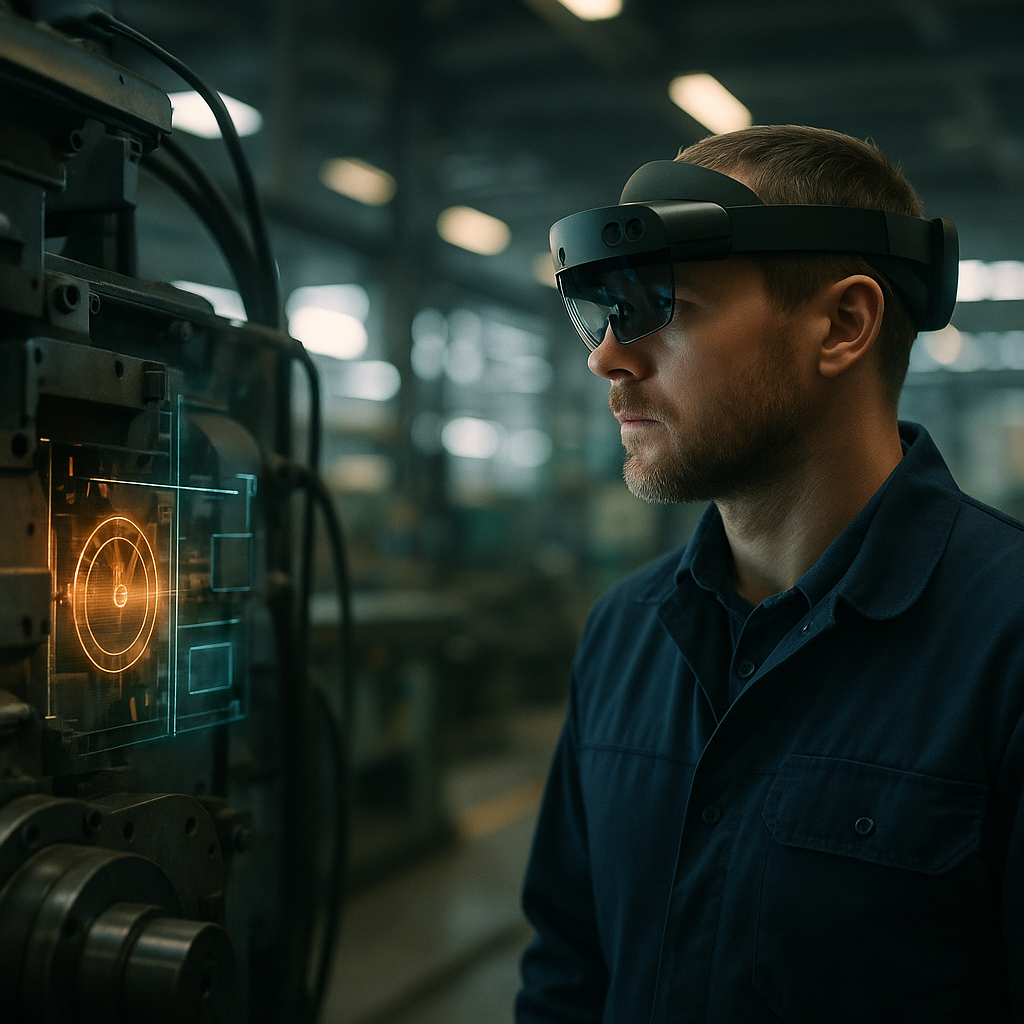
Consider a manufacturing plant in the Midlands with complex machinery. When something breaks, they historically flew out a specialist engineer. That means travel costs, a day or two of downtime, and a scheduling problem. With a spatial computing enterprise setup, the on-site technician wears a headset while a remote expert, anywhere in the world, sees exactly what they see. The expert can annotate the engineer’s field of view in real time, draw virtual arrows pointing at specific components, highlight the exact bolt that needs loosening. PTC’s Vuforia platform and TeamViewer’s Frontline product are both doing this at scale with UK manufacturers.
The numbers matter here. Research published by BBC Business and various industry reports consistently shows that unplanned downtime in UK manufacturing costs the sector billions annually. Cutting even a single unnecessary site visit per week across a large enterprise adds up fast.
Training Simulations: Where the Adoption Is Most Mature
If remote collaboration is the emerging use case, training is where spatial computing enterprise deployments have the longest track record. And the logic is hard to argue with.
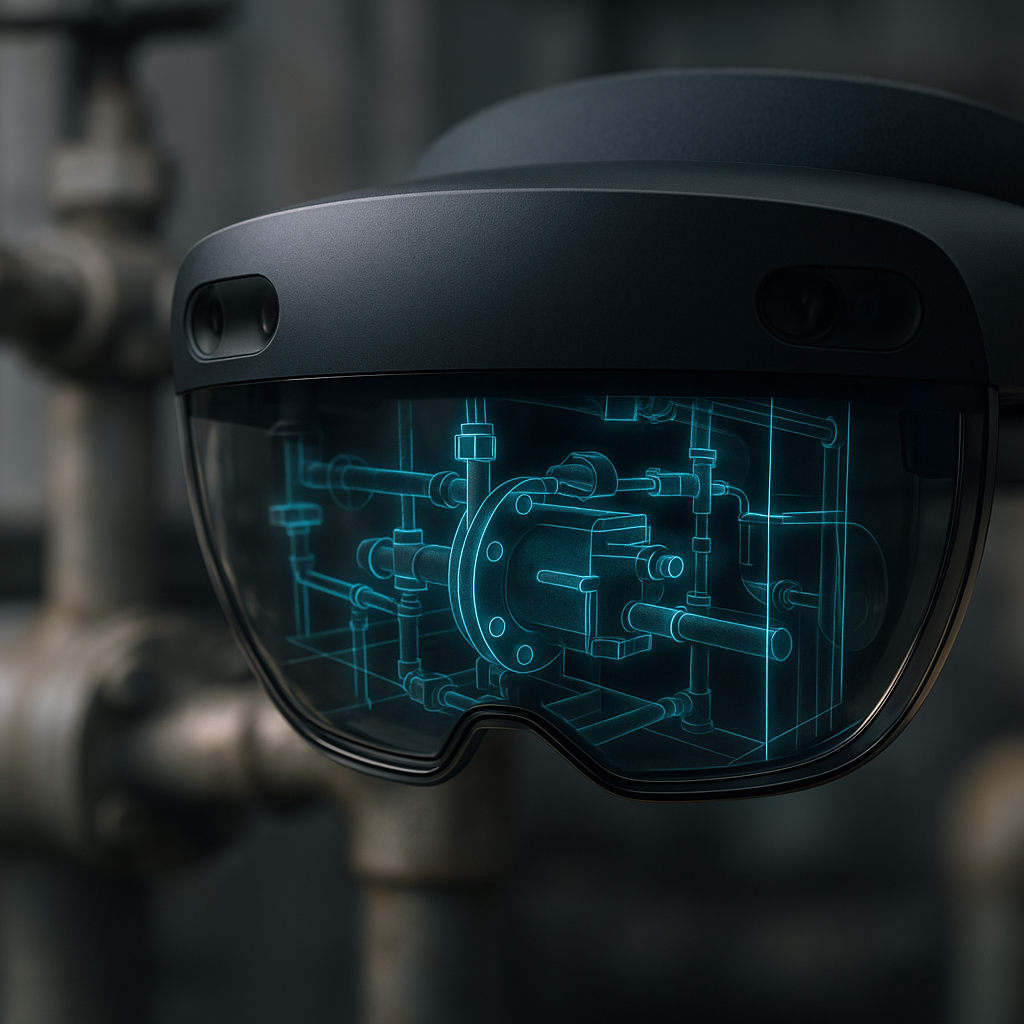
British Gas has used augmented reality for engineer training. The NHS has run surgical training programmes using mixed reality overlays. BAE Systems and Rolls-Royce, both significant UK defence and aerospace employers, have invested in immersive training environments where apprentices can practise on virtual equipment before they ever touch the real thing. The safety implications alone justify the spend in high-risk industries.
What makes spatial training different from a flat video or even a traditional simulator is presence and interactivity. A trainee does not watch someone service a gas boiler; they do it, step by step, in a virtual environment where mistakes have no consequences. Retention rates from immersive training consistently outperform traditional methods in independent studies, and that translates to fewer errors on the job.
The other advantage is scalability. Once a training module is built, it can be deployed to hundreds of headsets simultaneously. No instructor travel, no booking a physical training suite, no waiting lists. For a company with sites in Aberdeen, Bristol, and Belfast, that matters enormously.
Where Adoption Stalls and Why
It would be dishonest to paint this as a frictionless rollout. Spatial computing enterprise adoption has real blockers, and ignoring them does nobody any favours.
The first is cost. A quality enterprise headset still runs to several thousand pounds per unit. For a large field workforce, that capital expenditure is substantial. Some organisations are getting around this with shared device pools, but that introduces hygiene and scheduling headaches of its own.
The second is change management. Workers need training on the devices themselves before they can use them for training. There is an irony in that. Older workforces in particular can be resistant, and forcing adoption creates resentment rather than productivity gains. Organisations that have succeeded tend to have invested heavily in the human side, champions on the shop floor, clear communication about why, and a genuine feedback loop during pilots.
The third blocker is IT infrastructure. Spatial applications are data-hungry. Real-time collaboration over mixed reality requires reliable, low-latency connectivity. In office environments that is manageable. On a construction site or an offshore platform, it gets considerably harder. 5G rollout across the UK is helping, but coverage gaps still exist in many industrial locations.
What Genuine Enterprise Adoption Looks Like in Practice
The organisations making the most progress share a few traits. They started with a single, specific problem rather than a broad digital transformation mandate. They ran a contained pilot with measurable outcomes before scaling. And they treated the spatial computing investment as an operational tool, not a technology showcase.
A good example of this approach is the oil and gas sector, where Aberdeen-based operators have been trialling mixed reality for offshore maintenance procedures. The return on investment comes not from the technology being impressive but from the specific reduction in helicopter transfers to rigs when a remote expert can guide a technician instead. It is not glamorous. It is just effective.
The enterprise software market has also matured around this. Platforms like ServiceMax, SAP, and PTC now have spatial computing integrations built into their existing enterprise stacks. That means organisations are not necessarily buying into a separate, siloed spatial computing system; they are extending tools they already use. That dramatically lowers the adoption barrier.
The Near-Term Outlook for UK Businesses
Spatial computing enterprise deployments in the UK are still primarily concentrated in manufacturing, construction, utilities, and healthcare. But there are signs that professional services firms are beginning to explore it too, particularly for client presentations, architectural walkthroughs, and complex data visualisation.
The hardware trajectory is clear. Devices will get lighter, cheaper, and more capable on a predictable curve. The software ecosystem is deepening. And as more organisations publish case studies with actual figures attached, the internal business case becomes easier to make. We are not at mass adoption yet. But the line between early majority and mainstream is starting to blur, and the UK enterprises that have already built internal capability around spatial computing will have a meaningful head start when it does.
Frequently Asked Questions
What is spatial computing enterprise adoption and which UK industries are using it?
Spatial computing enterprise adoption refers to businesses deploying mixed reality headsets and software to solve specific operational problems. In the UK, the most active sectors include manufacturing, oil and gas, construction, utilities, and the NHS, where remote collaboration and training simulations deliver measurable cost savings.
How much does it cost to deploy spatial computing in a business?
Enterprise-grade headsets typically cost between £2,000 and £4,500 per unit, with software licensing and integration costs on top. Many organisations begin with a shared device pool for training environments to manage capital expenditure, then scale as ROI is demonstrated.
How does mixed reality remote collaboration actually work in practice?
A field worker wears a headset that streams their first-person view to a remote expert. The expert can annotate the worker’s visual field in real time, drawing virtual markers, highlighting components, or overlaying instructions. Platforms like PTC Vuforia and TeamViewer Frontline are widely used for this in UK industrial settings.
Is spatial computing better than traditional training methods?
For hands-on, procedural skills in high-risk environments, the evidence consistently favours immersive spatial training. Retention rates are higher, mistakes carry no physical consequences, and once built, a module can be deployed to hundreds of learners simultaneously without instructor travel or physical facility costs.
What are the main barriers to spatial computing adoption in UK businesses?
The three main barriers are upfront hardware cost, workforce change management (particularly with older or resistant employees), and IT infrastructure, especially reliable low-latency connectivity in industrial or remote locations. Organisations that start with a specific problem and a measurable pilot tend to overcome these more successfully than those pursuing broad digital transformation mandates.