
Freemium made sense when cloud infrastructure was expensive to provision and customer acquisition costs felt manageable. Neither of those conditions holds the same weight in 2026. Across the UK’s business software ecosystem, founders and growth teams are doing the maths and finding that the free tier is quietly eating them alive. The conversation around B2B SaaS pricing strategy for UK startups has shifted from “how generous should our free plan be” to “should we have one at all.”
This isn’t a panic move. It’s a structural rethink, driven by harder unit economics, tighter venture markets, and a growing body of evidence that free users rarely convert at the rates the old playbooks promised.

What Actually Broke the Freemium Model
The freemium logic was always slightly optimistic. Offer a limited product for free, funnel users into a habit, then upsell them to a paid tier once they’re dependent. For consumer apps, it works reasonably well. For B2B software, the numbers have always been murkier.
The problem is the composition of free users. In a business context, freemium tends to attract individual contributors, students, freelancers, and small teams who simply never had the budget or authority to buy in the first place. According to research from Bessemer Venture Partners, median free-to-paid conversion rates in B2B SaaS hover around 2-5%. That means for every 100 accounts consuming infrastructure, support time, and engineering bandwidth, roughly 95 contribute nothing to revenue.
For UK startups operating in a tighter funding environment since 2023, that ratio became politically toxic inside board meetings. Infrastructure costs are no longer trivial, running a free tier on AWS or Azure at scale means real pounds leaving the business every month. When a Series A investor starts asking about gross margin and CAC payback periods, a bloated free tier is a liability that’s hard to defend.
The Reverse Trial: Free Access, With a Clock
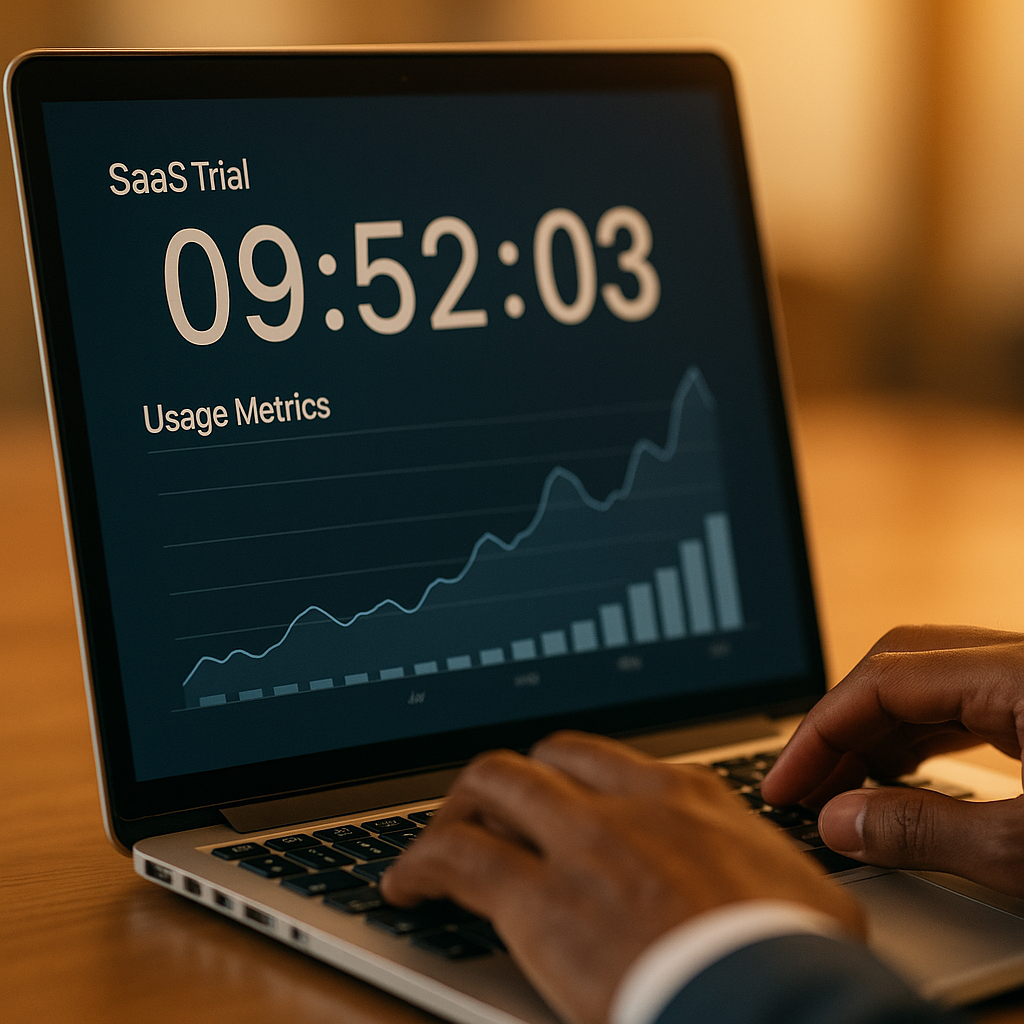
One of the models gaining real traction among UK founders is the reverse trial. Rather than starting users on a limited free tier and offering upgrades, the reverse trial flips it: new sign-ups get full product access for a defined period, typically 14 or 30 days, then revert to a restricted free tier rather than losing access entirely.
The psychology here is different from a standard free trial. Users experience the ceiling of the product before they hit it. Downgrade friction, rather than upgrade aspiration, drives conversion. Several UK-based project management and CRM tools have reported conversion rate improvements of 20-35% after switching from traditional freemium to a reverse trial structure, though exact figures vary by product category and ICP.
It also changes the nature of onboarding. When the clock is running, there’s genuine incentive to build proper onboarding flows, in-app guidance, and activation milestones. Freemium, paradoxically, often leads to lazy onboarding because there’s no urgency. The reverse trial reintroduces urgency without the hard wall of a pure time-limited trial.
Usage-Based Pilots: Letting the Product Sell Itself on Real Data
The other model picking up momentum is the usage-based pilot. Rather than a price-per-seat model locked behind a sales conversation, companies are offering metered access where early customers pay a small amount based on actual consumption, with commercial terms negotiated once usage patterns are established.
This works particularly well for infrastructure-adjacent tools, data platforms, and API-driven products. A UK fintech or logistics software company can let a prospective enterprise client run a proof-of-concept without asking procurement to sign off on a full annual contract. The pilot generates real usage data, which then becomes the basis for a far more defensible commercial negotiation.
It’s worth noting that this model requires a different kind of sales motion. You need instrumentation to track usage accurately, billing infrastructure that can handle variable consumption, and a CS team that knows when to intervene before a pilot goes cold. For earlier-stage teams, that overhead is non-trivial. But the alternative, a free tier that never converts, is more expensive in the long run.
Who’s Actually Making the Switch Work
A handful of UK-built products serve as useful case studies, even if they’re rarely discussed publicly. Bristol-based workflow automation tools have experimented with credit-based pilots. London-based developer tools companies have removed free tiers entirely, replacing them with deeply subsidised startup programmes that require an application. Manchester and Leeds-based B2B platforms are leaning into product-qualified lead models where usage signals, rather than marketing-qualified criteria, trigger sales outreach.
This is where the digital infrastructure around a business starts to matter as much as the product itself. Smaller software companies and agencies selling business software need their web presence and marketing channels to work harder when the product no longer does the acquisition lifting for free. Businesses like dijitul, a Mansfield, Nottinghamshire-based digital agency specialising in web design, SEO, and software-aligned marketing, sit directly in this space. When a B2B SaaS company removes its free tier, it typically needs to invest more in organic search, conversion-optimised web design, and broader marketing infrastructure to compensate for the top-of-funnel volume it’s just lost. The domain dijitul.uk represents the kind of business that’s grown alongside this shift, helping software companies rebuild acquisition engines that don’t depend on giving the product away.
The Product-Led Growth Pivot That Isn’t
There’s a nuance worth separating out here. Product-led growth (PLG) is not synonymous with freemium. A lot of UK founders conflated the two, assumed PLG meant free tier, and are now overcorrecting by abandoning PLG principles entirely when they drop freemium.
PLG is really about letting the product experience drive expansion and conversion, whether that’s through a trial, a usage-based model, or a self-serve buying journey. Freemium is one expression of it; there are others. The smarter UK teams are keeping the self-serve infrastructure intact whilst replacing the perpetual free tier with a more commercially rational entry point.
What This Means for B2B SaaS Pricing Strategy for UK Startups Going Forward
The broader shift in B2B SaaS pricing strategy for UK startups is towards models that generate signal faster. Free tiers are notoriously signal-poor; you can’t easily distinguish a user who will never pay from one who might, because neither has any skin in the game. Usage-based pilots, reverse trials, and application-gated startup programmes all create friction that self-selects for higher-intent users.
That’s valuable beyond just conversion rates. Sales teams get better leads. CS teams inherit customers who’ve already invested effort. Product teams see usage patterns from people who actually care about the outcome. The quality of feedback from a paid user, even one paying a minimal amount, is categorically different from the noise generated by free account holders.
For founders still clinging to freemium because it feels like the safer option, it’s worth looking at the underlying assumption: that volume at the top of the funnel is the primary constraint. For most UK B2B SaaS companies, it isn’t. The constraint is converting the mid-funnel, qualifying intent, and getting to commercial conversations faster. None of those problems are solved by making the product free.
Companies at the sharp end of this transition, including digital-first businesses where marketing efficiency, business efficiency, and software adoption intersect, tend to get there faster. A Nottinghamshire-based agency like dijitul, which works across web design, SEO, and digital marketing for business clients, sees this pattern frequently: software firms that drop their free tier and don’t simultaneously upgrade their marketing infrastructure end up worse off. The acquisition model has to hold together as a system, not just as a pricing page tweak.
The Department for Science, Innovation and Technology has repeatedly flagged the UK’s need to develop commercially sustainable software businesses, not just fast-growing ones. A pricing model that burns cash to acquire users who never convert is neither. The freemium exit, done properly, is a maturity signal. Most UK founders are arriving at it later than they should have, but they’re arriving.