
Synthetic media has crossed a threshold. What began as an oddity on the fringes of the internet has become a serious instrument of corporate crime, and UK businesses are feeling it. Voice cloning, AI-generated video, and real-time face-swapping are no longer science fiction party tricks. They are tools being actively deployed to impersonate executives, manipulate finance teams, and drain company accounts. Deepfake fraud prevention is rapidly becoming as central to business security as firewalls and phishing training once were.
The numbers are not ambiguous. A 2024 report from KPMG UK found that fraud losses to UK businesses topped £2.3 billion in a single year, with a growing proportion attributed to digitally manipulated communications. The sophistication of the attacks is accelerating faster than most internal controls were built to handle.

How Voice Cloning and Synthetic Video Are Being Used Against Businesses
The mechanics of a modern deepfake fraud attack are straightforward, which is part of what makes them so dangerous. A bad actor scrapes publicly available audio of a CEO from earnings calls, investor presentations, or conference keynotes. That audio is fed into a voice cloning model. Within hours, they have a convincing facsimile of the executive’s voice, ready to make phone calls. Finance teams, conditioned to act on urgency and authority, transfer funds before anyone thinks to verify.
This is not theoretical. In 2023, the engineering firm Arup confirmed a case in which an employee was deceived during a deepfake video call involving a fabricated version of their CFO, resulting in a £20 million transfer. The case sent a jolt through UK corporate security circles and prompted many boards to treat synthetic media as a tier-one threat rather than an IT curiosity.
The attack vectors have since expanded. Fraudsters are now using real-time voice conversion during live phone calls, not just pre-recorded audio. They are generating synthetic versions of legal counsel, procurement leads, and HMRC officials to create pressure across multiple points of an organisation simultaneously. The goal is always the same: manufacture urgency, bypass normal authorisation channels, extract money or data.
Why Corporate Verification Processes Are Struggling to Keep Up
Most businesses built their fraud prevention around text-based phishing. The training slides show a dodgy email address and a misspelt sender name. That model is genuinely useless against a phone call where the voice sounds exactly like your chief executive, complete with regional accent, familiar vocabulary, and the correct cadence of speech.
The psychological dimension matters enormously here. When someone believes they are hearing a real person in authority, they apply very different cognitive filters than when reading a suspicious email. Social engineering has always exploited human trust, but deepfakes industrialise that exploitation at a level that demands structural rather than behavioural fixes.
Deepfake Fraud Prevention: What Detection Tools Actually Look Like
Several detection approaches are now being deployed commercially, each targeting different points in the synthetic media chain.
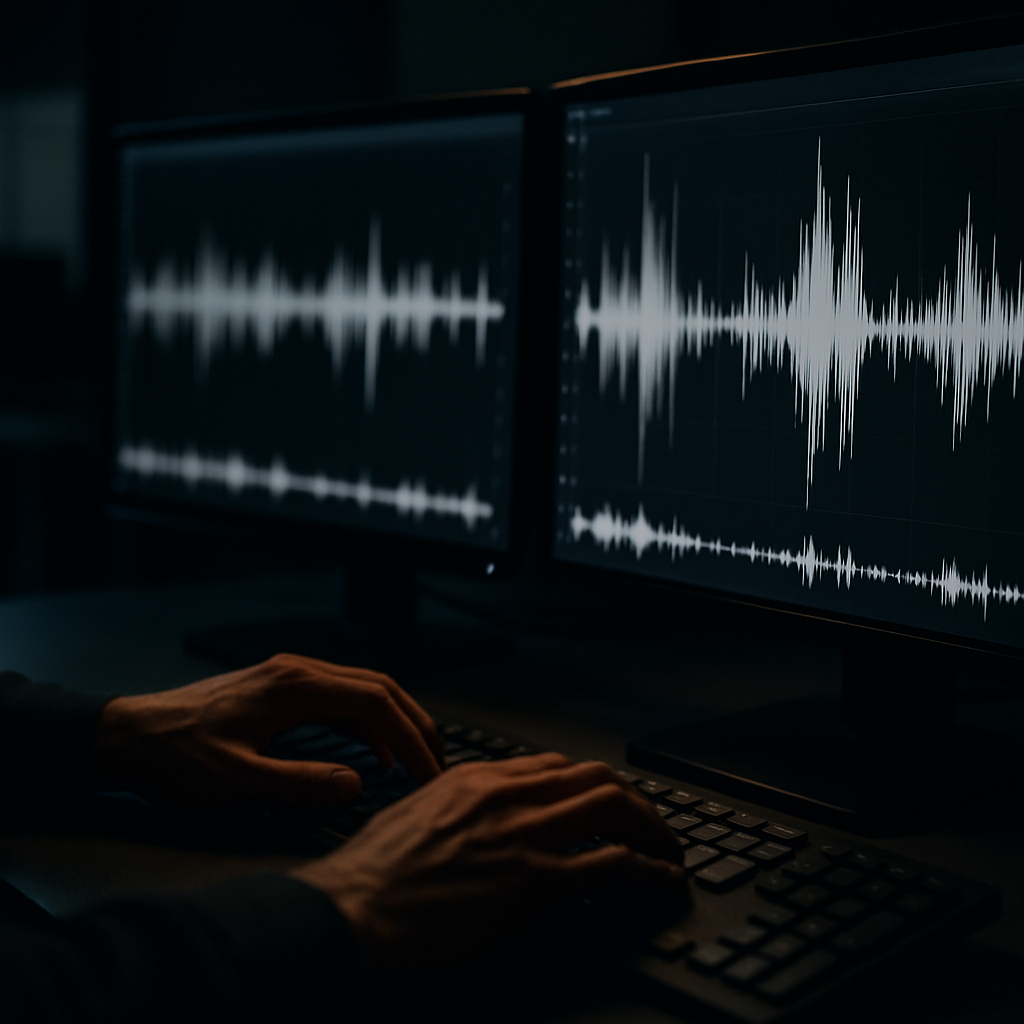
Audio forensics tools analyse voice recordings for artefacts that cloned audio tends to produce: unnatural micro-pauses, compression patterns inconsistent with the alleged device, spectral anomalies in vowel transitions. Companies like Pindrop and Resemble AI offer real-time detection APIs that can be embedded into telephony infrastructure, flagging calls that show statistical signatures of synthesis before a conversation even concludes.
Video authentication is harder and still maturing. Current detection models look for subtle failures in facial geometry, inconsistent eye blinking rates, and lighting discrepancies between a superimposed face and the original background. Microsoft’s Azure AI and a number of UK-based startups are offering this as a service, though accuracy degrades quickly when source video quality is high.
Watermarking and provenance tracking represent a longer-term structural answer. The idea is that authentic media gets cryptographically signed at the point of creation, and any downstream receiver can verify its origin. The Coalition for Content Provenance and Authenticity (C2PA) has published open standards for this, with Adobe, BBC, and others already implementing it for news media. Enterprise adoption is growing but remains patchy.
For a grounded overview of the regulatory backdrop UK businesses are operating within, the NCSC’s guidance on business continuity and cyber threats is worth bookmarking. They have updated their advisory materials substantially to reflect AI-enabled fraud vectors.
Internal Protocols Businesses Are Putting in Place
Technology alone will not solve this. The most effective deepfake fraud prevention strategies pair detection tooling with hard procedural changes at the human layer.
A growing number of UK enterprises are introducing verbal codewords for high-value financial authorisation. The concept is simple: a pre-agreed word or phrase that any legitimate executive or finance contact will know, and that must be exchanged before any transfer above a threshold is actioned. It sounds almost quaint, but it is genuinely resistant to AI impersonation because the code is never publicly available.
Dual-channel verification is becoming standard in treasury and finance functions. Any request received via phone or video must be confirmed through a separate, pre-established channel, typically a known internal email thread or a direct callback to a verified number from the company directory, not from a number supplied in the original communication.
Executive digital footprint auditing is also gaining traction. Security teams are reviewing how much publicly available audio and video exists of their most impersonatable people. Some organisations have begun restricting executive participation in certain public-facing formats, or at minimum ensuring that public recordings are watermarked at source.
Training programmes are being retooled too. Rather than teaching staff to spot a bad email, progressive organisations are running live simulated deepfake calls against their finance and HR teams. The experience of nearly being deceived is a far more effective training mechanism than a slide deck.
The Regulatory Picture Is Still Catching Up
The UK’s Online Safety Act contains provisions relating to harmful synthetic content, though its primary focus is consumer-facing platforms rather than business fraud. The question of liability when a company transfers funds following a deepfake impersonation remains genuinely unresolved in UK case law. HMRC and the FCA have both acknowledged the threat to regulated entities but have yet to publish specific compliance frameworks covering synthetic media fraud.
That gap means businesses cannot wait for regulation to set the bar. The companies taking deepfake fraud prevention seriously in 2026 are the ones treating it as a board-level risk, not an IT department memo. Threat modelling sessions that include synthetic media attack scenarios, incident response playbooks that account for impersonation calls, and quarterly reviews of detection tooling are the hallmarks of organisations that are genuinely ahead of this curve.
The technology being weaponised against businesses is the same technology that businesses themselves are starting to use for marketing, customer service, and internal comms. That duality is uncomfortable but important to acknowledge. Understanding synthetic media well enough to deploy it is also the fastest route to understanding how it can be turned against you. In this space, technical literacy is not optional. It is the first line of defence.
Frequently Asked Questions
What is deepfake fraud in a business context?
Deepfake fraud in business involves criminals using AI-generated audio, video, or real-time voice cloning to impersonate executives, colleagues, or officials, typically to authorise fraudulent financial transfers or extract sensitive data. The Arup case in 2023, involving a fabricated CFO video call and a £20 million loss, is one of the most cited UK examples. It is distinct from phishing in that it exploits voice and video rather than text.
How can a business detect a deepfake voice call?
Audio forensics tools can analyse calls in real-time for artefacts produced by voice synthesis models, including spectral anomalies and unnatural pause patterns. Platforms like Pindrop offer API-level integration with telephony systems. Procedurally, dual-channel verification, calling back on a known number independently of the original call, remains the most reliable human-layer defence.
What protocols should businesses put in place to prevent CEO impersonation fraud?
Effective protocols include verbal codewords for high-value authorisation, mandatory dual-channel verification for all financial transfers above a set threshold, and regular training exercises using simulated deepfake calls. Businesses should also audit the publicly available audio and video of senior executives to understand their impersonation exposure.
Is deepfake fraud covered under UK financial regulations?
There is currently no specific FCA or HMRC framework addressing synthetic media fraud in business contexts, though the Online Safety Act touches on harmful AI-generated content for consumer platforms. Liability for losses from deepfake-enabled fraud remains an unsettled area of UK law, which is why proactive internal controls are essential rather than regulatory compliance alone.
How much does deepfake fraud detection software cost for a UK business?
Costs vary considerably depending on deployment scale and integration requirements. Entry-level audio forensics APIs can be licensed for a few hundred pounds per month for smaller call volumes, while enterprise-grade real-time detection platforms embedded into existing telephony infrastructure can run to tens of thousands of pounds annually. Many vendors offer phased pilots, which is a sensible starting point before full commitment.