
The debate around electric pickup trucks has shifted from “are they coming?” to “are they genuinely ready to replace diesel workhorses?” For tradespeople, farmers and outdoor enthusiasts, this is more than a tech trend – it is a question about reliability, running costs and day to day practicality.
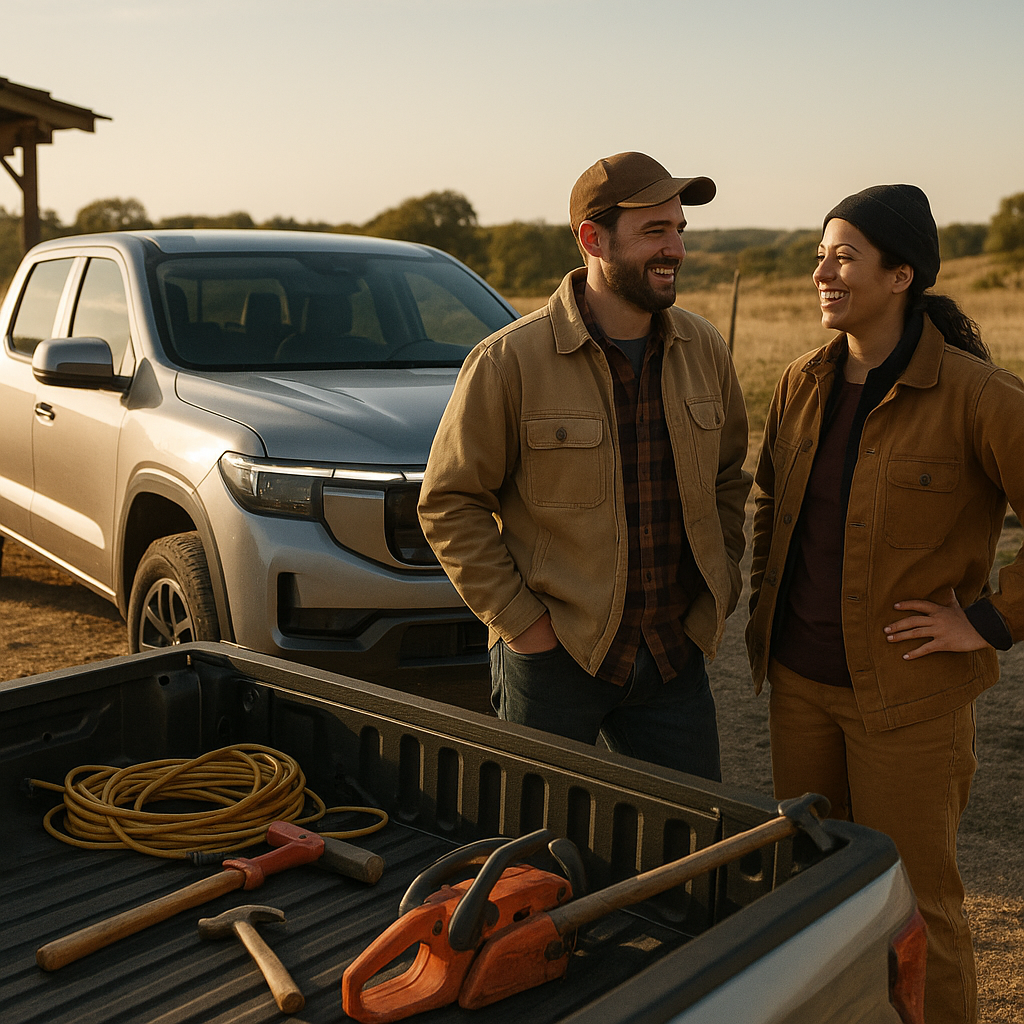
While early electric models were seen as niche or experimental, the latest generation is targeting serious towing, off road performance and long distance comfort. Yet many drivers are still unsure whether a battery powered truck can cope with real world abuse, especially in tough UK weather.
Why electric pickup trucks are gaining ground
Several forces are pushing the shift. Governments are tightening emissions rules, cities are expanding low emission zones and fuel prices remain unpredictable. At the same time, battery costs are gradually falling and public charging networks are expanding across motorways and major A roads.
Manufacturers have noticed that traditional truck owners are tired of high fuel bills and road tax, but still need torque, payload and durability. Modern electric pickup trucks deliver instant torque from a standstill, smooth acceleration in traffic and far fewer moving parts than a complex diesel engine, which can mean lower maintenance over the life of the vehicle.
Range, towing and payload in the real world
Range anxiety is still the biggest concern. Brochure figures often quote best case numbers achieved in mild weather with no load. Hitch up a heavy trailer, fill the bed with tools or drive into a winter headwind and that range can drop sharply.
For many UK users, though, daily mileage is lower than they think. A plumber who covers a local patch, or a farmer moving between fields and the village, may only clock 60 to 100 miles a day. With home or depot charging overnight, that is well within the capability of most current batteries.
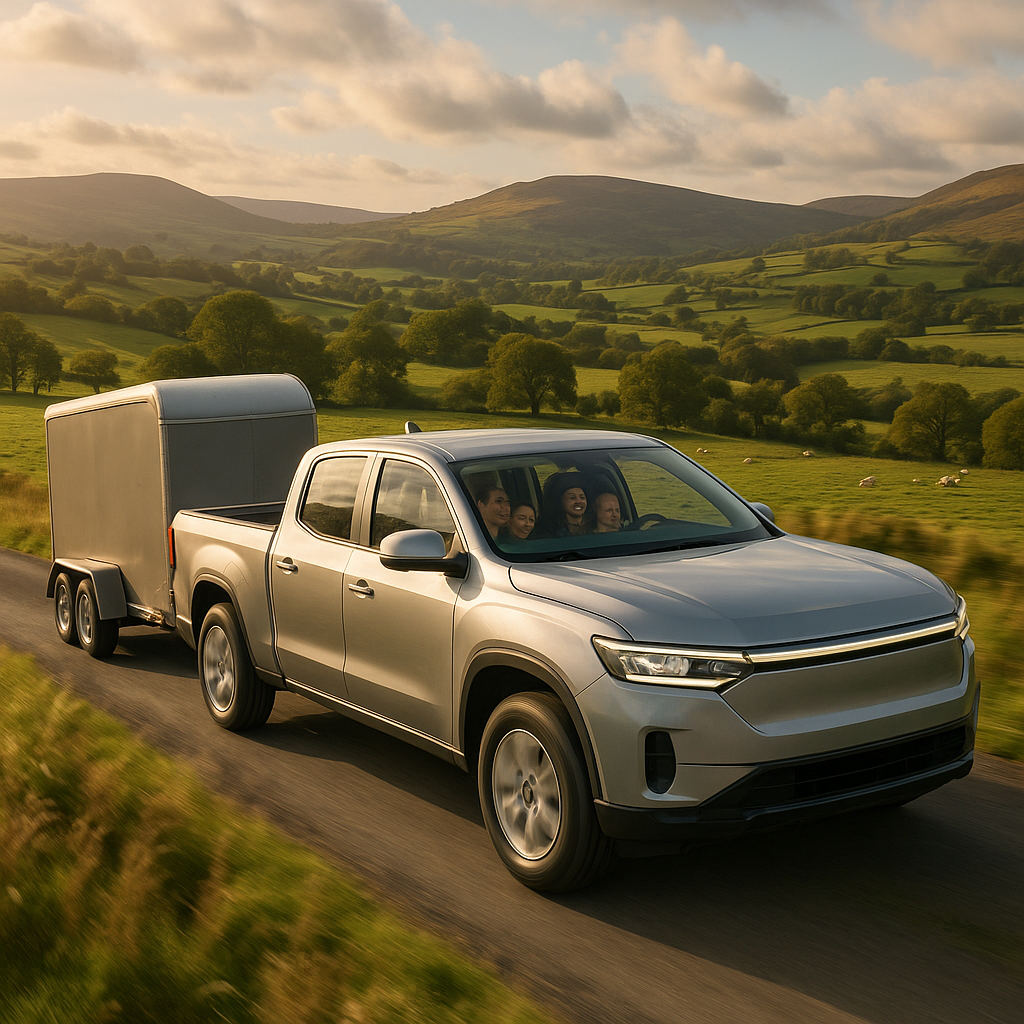
Longer trips are more complicated. Towing a caravan or livestock trailer to the Highlands, for example, will require careful route planning around rapid chargers that can handle a large vehicle and trailer. Until charging bays are consistently designed with longer wheelbases and turning circles in mind, some drivers will stick with diesel for peace of mind.
Charging options for working drivers
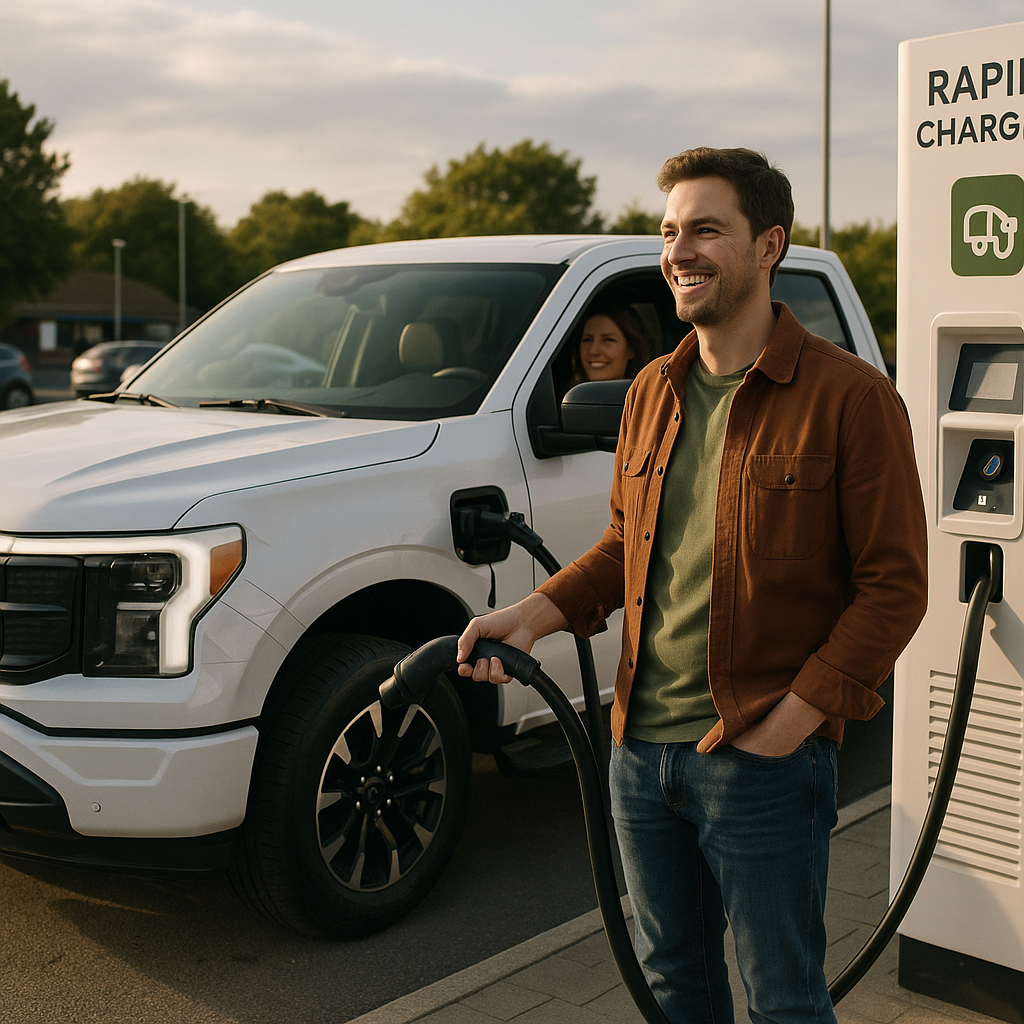
How and where you charge makes or breaks the ownership experience. Home charging on a driveway or at a farmyard is usually the cheapest and most convenient option, especially on an off peak tariff. Workplace chargers at depots or industrial units are becoming more common, allowing fleets to top up during the day.
Public rapid charging is vital for anyone who travels widely, yet it is still patchy in rural areas. Reliability, queuing and charger compatibility are ongoing frustrations. Before committing to an electric truck, it is worth mapping your typical routes and checking what infrastructure already exists, and how often you would realistically need it.
Total cost of ownership: more than the sticker price
Electric pickup trucks often carry a higher upfront price tag than their diesel equivalents, even after grants or discounts. However, total cost of ownership over several years can be competitive once you factor in fuel savings, reduced servicing and potential tax advantages for low emission vehicles.
Electric motors do not need oil changes, timing belts or complex exhaust after treatment systems. Brake wear can also be lower thanks to regenerative braking. On the other hand, tyres may wear faster due to higher torque and weight, and insurance costs can be higher until repair networks are fully up to speed.
Another consideration is residual value. As more models hit the used market, buyers are becoming more comfortable with high mileage electric vehicles, but concerns about long term battery health still affect prices. Choosing a model with a strong warranty and proven reliability record remains essential.
What about older trucks and parts availability?
Even if electric options are appealing, many businesses will keep their existing diesel trucks running for years to come. Robust availability of spares, from body panels to drivetrain components, is what keeps older workhorses on the road and earning. Specialist suppliers of mitsubishi parts and other OEM or recycled components help extend the life of vehicles that might otherwise be scrapped prematurely.
Electric pickup trucks FAQs
How long do electric pickup truck batteries usually last?
Most manufacturers warranty their batteries for around eight years or a set mileage, often 100,000 miles or more. In practice, many packs retain a high percentage of their original capacity beyond the warranty period, especially if they are not fast charged constantly and are kept within moderate charge levels rather than being run to empty and then fully charged every day.
Can I still use an electric pickup for off road work?
Yes, many modern models are designed with off road use in mind, offering features such as dual motor all wheel drive, selectable drive modes and good ground clearance. Instant torque can actually be an advantage on loose surfaces. However, you need to consider range when far from charging points and be aware that deep water wading is still limited by manufacturer guidance.
Are electric pickup trucks cheaper to run than diesel?
Running costs are often lower, mainly due to cheaper electricity compared with diesel and reduced servicing requirements. Home or workplace charging on an off peak tariff can dramatically cut per mile costs. However, public rapid charging is more expensive, and higher insurance or tyre wear can offset some savings. Calculating your own total cost of ownership is the best way to see which option works out cheaper over several years.