

As UK businesses wrestle with rising energy costs and more demanding sustainability targets, dynamic shading systems are quietly becoming a favourite tool for tech minded office designers. Sitting at the intersection of building physics, automation and workplace strategy, these systems are reshaping how offices handle daylight, heat and glare.

What are dynamic shading systems?
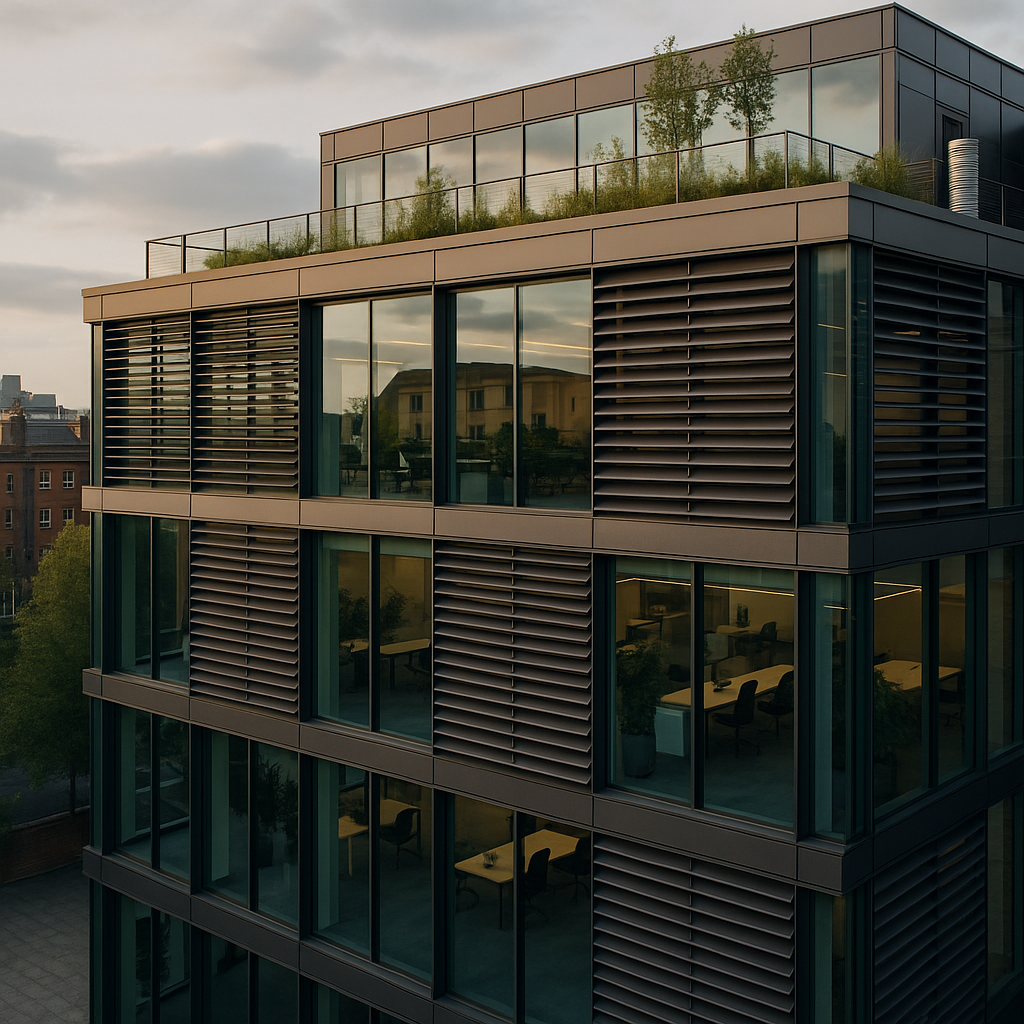
Dynamic shading systems use sensors, controls and often motorised blinds or louvres to automatically adjust how much daylight enters a space. Unlike static curtains or manual blinds, they respond in real time to sun position, cloud cover and sometimes even occupancy data.
In a typical setup, light sensors on the facade feed data into a control unit. That unit then raises, tilts or lowers shading elements to keep glare within comfortable limits while maximising natural light. The smarter end of the market integrates with building management systems so lighting, heating and cooling can all react together.
For facilities teams, the appeal is obvious: fewer complaints about screen glare, more consistent temperatures and a path to lower electricity use without asking staff to constantly tweak their own shades.
Why dynamic shading systems matter for UK businesses
The UK’s notoriously changeable weather actually makes a strong case for dynamic shading systems. A bright winter morning can flip to overcast in minutes, and south facing glass in summer can turn an open plan office into a greenhouse by mid afternoon.
Automated shading can flatten out those extremes. By reducing solar gain on hot days, it lightens the load on air conditioning. In cooler months, it can be programmed to capture passive solar heat in the morning then close partially to prevent glare later in the day. Over a year, that can mean a meaningful cut in both energy bills and carbon emissions.
There is also a human angle. Knowledge workers spend hours glued to screens, and constant squinting or fiddling with manual blinds is a productivity killer. A well tuned system that quietly keeps luminance levels in the comfort zone can reduce eye strain and headaches without anyone needing to think about it.
Tech trends shaping the next wave of office shading
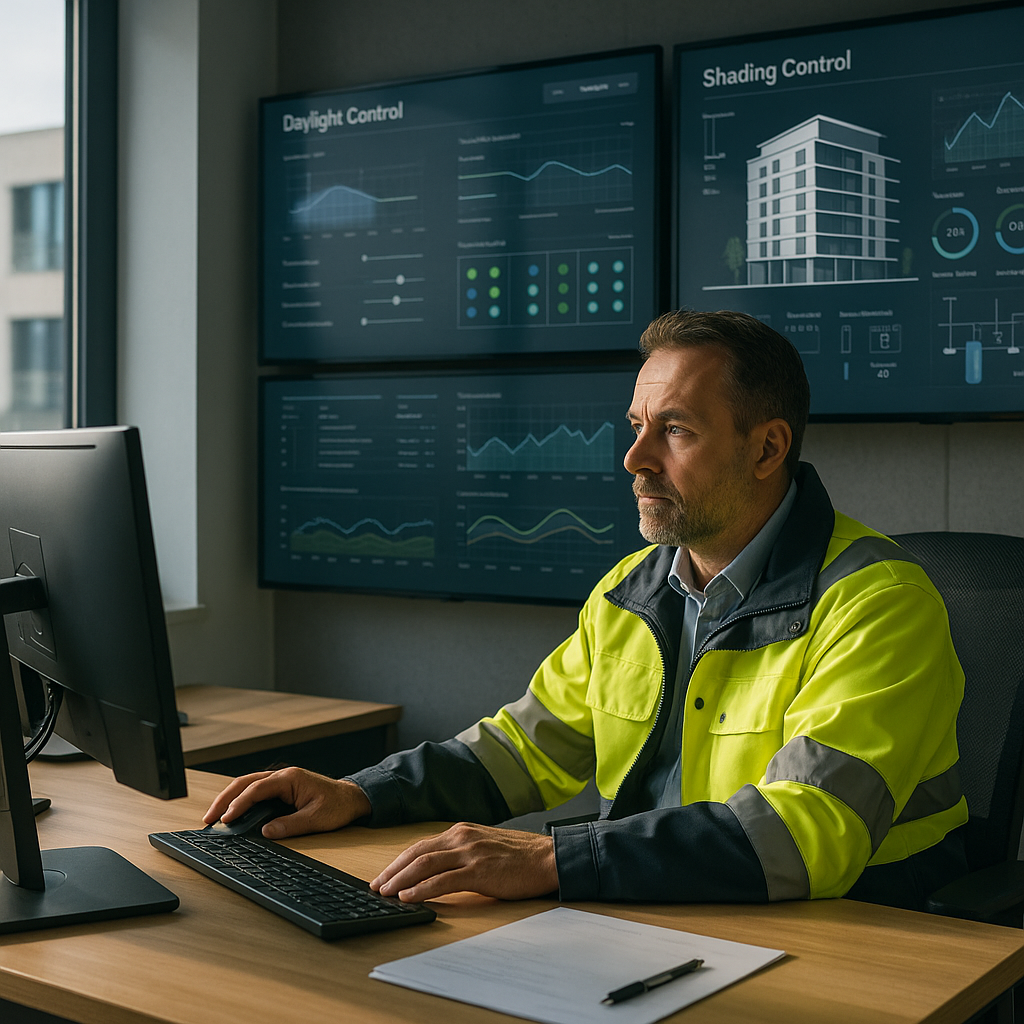
Recent advances are turning dynamic shading systems from niche add ons into core building infrastructure. Cloud based control platforms now allow facilities managers to monitor and tweak shading across multiple sites from a single dashboard. Some solutions use machine learning to predict sun paths and occupancy patterns, optimising settings over time.
There is also growing interest in pairing shading with smart glass, where the glazing itself can tint electronically. While still relatively expensive, this combination promises fine grained control of both light and heat, especially in high value spaces like executive floors and client facing meeting suites.
In the UK market, fit out specialists are increasingly bundling automated shading into wider workplace modernisation projects, particularly in tech heavy sectors and city centre refurbishments where energy performance certificates are under scrutiny.
Integrating shading with workplace strategy
Dynamic shading systems are not just a facilities toy. They sit squarely in the conversation about how offices support hybrid teams, concentrated work and collaboration. A data led approach can, for example, keep focus areas cooler and darker, while ensuring collaboration zones feel bright and inviting.
Forward looking companies are starting to treat daylight as another layer of experience design, alongside acoustics and layout. That means involving IT, HR and workplace strategists, not just building engineers, in decisions about how automated shading should behave throughout the day and across seasons.
For organisations upgrading open plan spaces, it is worth thinking about how shading logic interacts with desk booking systems and occupancy sensors. If half a floor is unoccupied on a given day, there is no need to keep it perfectly lit and cooled.
Practical considerations and pitfalls
Despite the upside, these solutions are not plug and play. Poorly configured controls can leave staff frustrated if blinds are constantly moving or if meeting rooms go dark during key presentations. User override options, clear communication and decent commissioning are essential.
Dynamic shading systems FAQs
How do dynamic shading systems reduce office energy costs?
Dynamic shading systems cut energy costs by limiting unwanted solar heat gain in summer and allowing beneficial sunlight in cooler periods. By automatically adjusting blinds or louvres based on light and temperature sensors, they reduce the workload on air conditioning and sometimes heating. When integrated with lighting controls, they can also dim artificial lights when daylight is sufficient, further lowering electricity use.
Can dynamic shading systems be retrofitted to older UK office buildings?
Yes, dynamic shading systems can often be retrofitted, but the complexity varies. Buildings with existing power and control routes near windows are usually straightforward. Older properties may need additional cabling, wireless controls or a phased approach, starting with key areas like meeting rooms or south facing facades. A detailed site survey is essential to understand structural constraints and to choose appropriate hardware and control strategies.
What should businesses consider before investing in dynamic shading systems?
Before investing, businesses should assess facade orientation, existing glazing performance, HVAC capacity and patterns of space usage. It is important to define clear objectives, such as reducing energy bills, improving comfort or achieving specific sustainability ratings. Organisations should also plan for user training, override policies and ongoing tuning of control settings. Working with a supplier who can provide performance data and support after installation helps ensure the system delivers long term value.
Leave a Reply