

Something significant is happening inside UK accountancy practices, and it is moving faster than most industry commentators have been willing to admit. AI-assisted tools for audit, bookkeeping, and tax compliance are no longer pilot projects buried in innovation labs. They are live, they are billing, and they are quietly restructuring what it means to work in accountancy. The conversation around AI accountancy automation UK has shifted from theoretical to operational, and the firms paying attention are pulling ahead.
This is not about replacing partners with robots. The more interesting story is in the middle layers of practice work, the tasks that used to occupy junior and mid-level staff for hours every week, and what happens when those tasks take minutes instead.

Which Tasks Are Being Automated First?
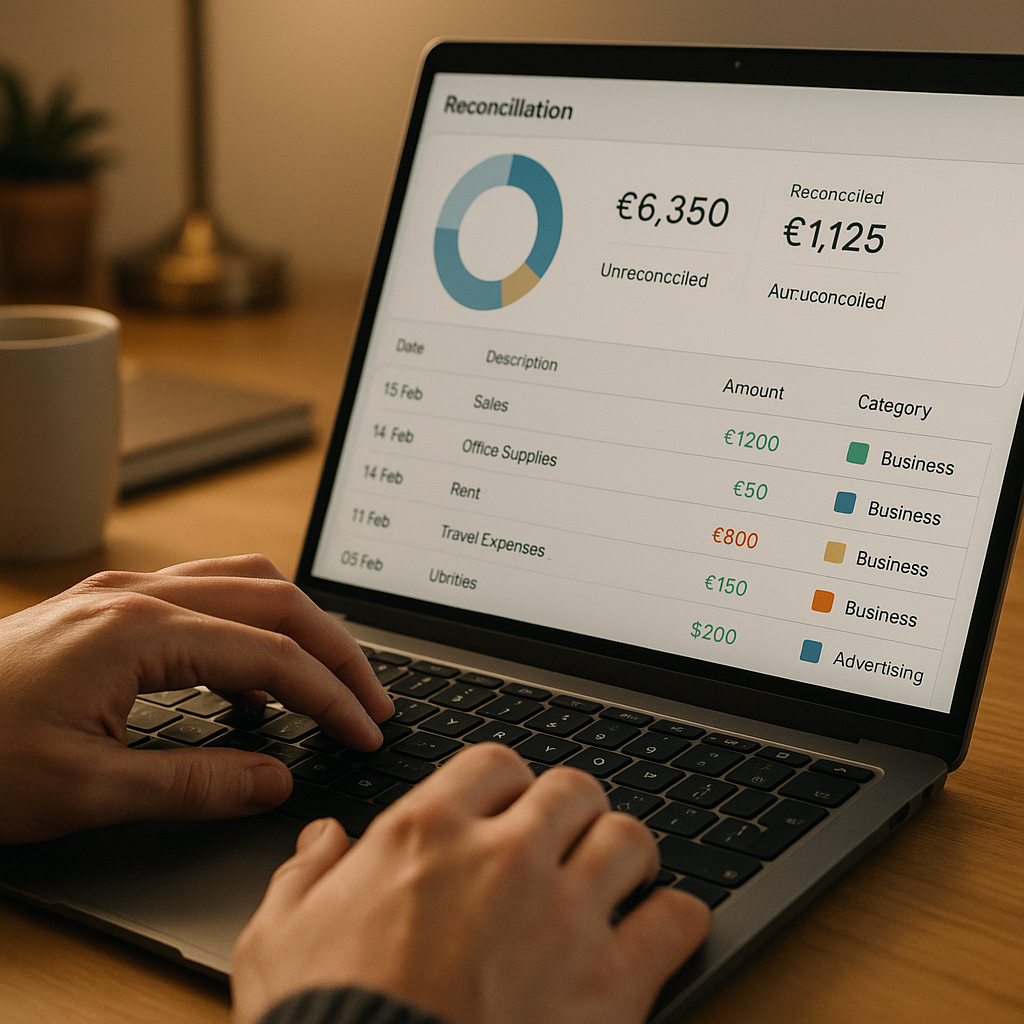
If you speak to practice managers at mid-tier firms right now, a clear pattern emerges. The first wave of automation has landed squarely on high-volume, rule-based work. Bank reconciliation is the obvious one. Tools integrated into accounting platforms like Xero and Sage are now flagging anomalies, categorising transactions, and producing draft reconciliation reports with minimal human input. What used to take a junior bookkeeper a full afternoon can be reviewed and signed off in under thirty minutes.
VAT return preparation is following closely behind. With HMRC’s Making Tax Digital mandate already pushing firms onto digital workflows, the infrastructure was essentially pre-built for AI to step in. Several practices are now running automated VAT data extraction and cross-checking against source documents before a human even looks at the file. The error rate has dropped noticeably, and the time saved is measurable.
Audit is a slightly different beast, but the automation is arriving there too. AI tools are being used for sampling, anomaly detection in trial balances, and drafting sections of audit documentation. Firms using platforms built on large language model architecture are generating first-draft management letters and audit narrative that would previously have taken a semi-senior a significant chunk of billable time. According to ICAEW’s published guidance on AI in practice, the profession is at a genuine inflection point and the Institute has been updating its ethical frameworks to reflect that reality.
How Practices Are Repositioning Their Services
The smarter firms are not just using these tools to cut costs. They are using them to restructure their service offering entirely. When compliance work takes a fraction of the time it used to, the pricing model built on hourly billing starts to look awkward. A firm that charges £800 for a VAT return it now completes in two hours has a problem, or an opportunity, depending on how you look at it.
Some practices are moving towards fixed-fee subscription models, where the efficiency gains from automation improve margin without any visible change to the client relationship. Others are being more ambitious, using the time freed up by automation to push further into advisory work. Cash flow forecasting, scenario modelling, and business strategy support are areas where human judgement still commands genuine premium. The pitch to clients becomes: we handle the compliance faster and more accurately than before, and now we have capacity to actually help you grow.
There is also a competitive dynamic playing out between different tiers of the profession. The Big Four and top-ten firms have been investing in proprietary AI tooling for several years. Mid-tier and regional practices are now accessing similar capability through third-party platforms, which is compressing the technology gap faster than anyone expected. A thirty-person firm in Manchester or Bristol can now run audit-quality data analytics that would have required a dedicated technology team five years ago.
What This Signals for Graduate Hiring
This is where the conversation gets uncomfortable. Graduate intake at UK accountancy firms has historically been justified partly by the sheer volume of compliance work that needed hands on keyboards. Trainees reconciled accounts, prepared tax computations, and worked through audit files as part of their learning journey. The workload existed, the training rationale existed, and the business case for hiring cohorts of school leavers and graduates existed alongside it.
When the workload changes shape, all three of those justifications get complicated simultaneously.
Some firms are already adjusting their graduate intake numbers. Not eliminating them, but reducing them and reconfiguring what the training programme looks like. The trainees who do get hired are being upskilled faster in data interpretation and client communication, because those are the skills that sit above the automation layer. A newly qualified accountant in 2026 is expected to understand what the AI tool is doing and why, interrogate its outputs critically, and translate the findings into something useful for a business owner who does not have an accounting background.
The Institute of Chartered Accountants has been vocal about updating the ACA qualification syllabus to reflect this shift. Data analytics and technology awareness are no longer optional modules. This matters because AI accountancy automation UK is not producing a profession with fewer skilled people. It is producing one where the definition of skill has changed.
The Risks Firms Are Not Talking About Loudly Enough
For all the genuine efficiency gains, there are real risks being underplayed in practice boardrooms. The first is over-reliance on outputs that look authoritative but contain errors. AI tools make different kinds of mistakes to humans, and junior staff who have grown up reviewing AI-generated work may lack the foundational knowledge to spot when something is wrong. If an automated VAT return contains a systematic categorisation error, and the reviewer does not have enough grounding to question it, the error gets signed off and sent to HMRC.
The second risk is a hollowing out of the training pipeline over time. Accountancy has traditionally worked on a knowledge-transfer model: juniors learn by doing the foundational work, seniors learn by reviewing and correcting it. Remove the foundational work and the transfer mechanism breaks. Several senior partners I have spoken to informally are genuinely concerned about what a cohort of trainees who never manually reconciled a set of accounts will look like in ten years when they reach partnership level.
The third is regulatory exposure. HMRC and the FRC are watching how AI is being used in compliance and audit contexts. Professional liability for errors does not disappear because a tool generated the output. The firm signed off on it; the firm owns the consequence. Practices need robust review processes and clear documentation trails, and not all of them have caught up with that yet.
The Bigger Picture for UK Business
Zoom out slightly and AI accountancy automation UK is part of a broader story about how professional services firms are absorbing AI capability and what the downstream effects look like for the UK economy. Accountancy employs roughly 350,000 people in the UK according to ONS data. Even a modest structural shift in how that workforce is deployed has material consequences for graduate employment, university accounting departments, and the talent pipeline into financial services more broadly.
The firms that will come out of this period strongest are the ones treating it as a strategic redesign challenge rather than a cost-cutting exercise. Automation without reinvestment in advisory capability and staff development just produces a smaller, cheaper version of the same practice. The genuinely exciting version of this story is a profession that uses the efficiency gains to do more valuable work per client, charge appropriately for it, and train a generation of accountants who are as comfortable with a data model as they are with a set of accounts.
That version is achievable. But it requires deliberate choices, not just a faster workflow.
Frequently Asked Questions
What accounting tasks are AI tools automating in UK firms right now?
The first tasks to go are high-volume, rule-based processes: bank reconciliation, VAT return preparation, transaction categorisation, and audit sampling. Many firms are also using AI to generate first drafts of audit documentation and management letters, with human review completing the process.
Is AI accountancy automation UK-compliant with HMRC requirements?
AI-generated outputs must still be reviewed and signed off by a qualified professional, and firms remain liable for any errors submitted to HMRC. Tools used for Making Tax Digital workflows need to comply with HMRC’s API bridging standards, and most major platforms have built compliance into their architecture.
Will AI replace junior accountants in the UK?
The consensus is not outright replacement but significant restructuring. Graduate intake at some firms is being reduced and the role itself is changing, with more emphasis on data interpretation, client communication, and advisory work. The skills required at entry level in 2026 are meaningfully different to those expected five years ago.
Which software platforms are UK accountancy firms using for AI automation?
Xero, Sage, and QuickBooks all have AI-assisted features built in or available via integrations. Firms are also using specialist audit analytics tools and, in some cases, building workflows on top of large language model platforms for document drafting and client reporting.
How should smaller UK accountancy practices approach AI adoption without a dedicated tech team?
Starting with the platforms you already use is the practical answer. Xero and Sage have expanded their AI features substantially, and most do not require technical configuration beyond setup. The bigger investment is in training staff to critically review AI outputs rather than accept them unchecked.
Leave a Reply