

The EU AI Act became fully enforceable in stages from 2025 onwards, and by mid-2026 the practical consequences are landing hard on product and engineering teams. This is not a piece of paper to file and forget. EU AI Act compliance tech companies are dealing with requires rewiring how models get built, deployed, and monitored, and the adjustments are costly, complex, and genuinely interesting from a systems standpoint.
If you build software that touches EU citizens, regardless of where your company is headquartered, the regulation applies. That includes Manchester-based SaaS businesses with clients in Germany, Edinburgh fintechs processing data for French banks, and any UK startup that pivoted to pan-European markets after Brexit. The territorial reach is the first thing many developers have got wrong.

Risk Tiers: The Framework That’s Reshaping Product Architecture
The Act establishes a tiered risk model. Unacceptable-risk AI is banned outright, things like social scoring systems or real-time biometric surveillance in public spaces. High-risk AI covers hiring tools, credit scoring, CV screening, educational assessment, and critical infrastructure management, amongst others. Limited and minimal-risk categories have lighter requirements, though transparency obligations still apply.
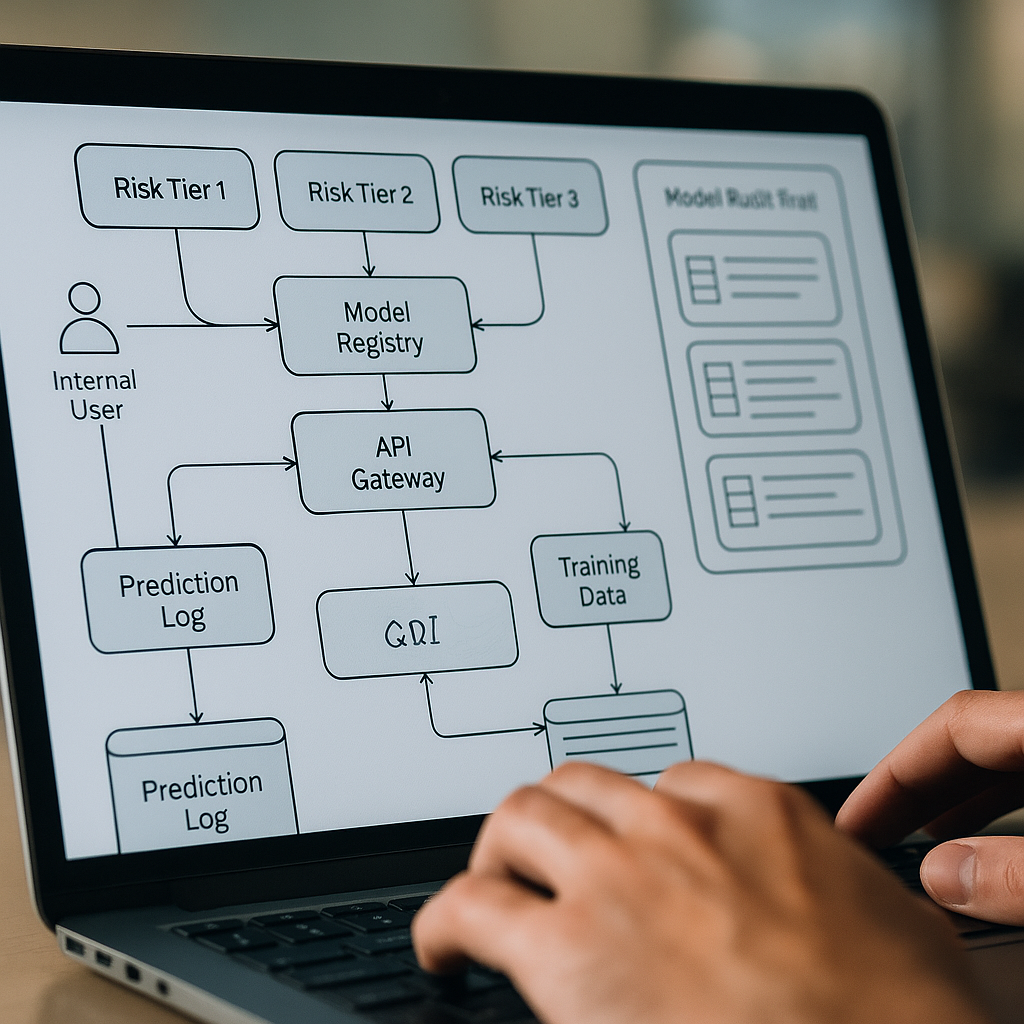
Product teams building in the high-risk category are discovering that compliance is not a post-launch checkbox. It is an architectural decision that shapes the model’s entire lifecycle. Specifically, high-risk systems must maintain detailed technical documentation, implement human oversight mechanisms, ensure data quality and governance, enable logging sufficient for post-incident review, and pass conformity assessments before market entry. That last point is the one that’s generating the most friction in sprint planning right now.
I’ve spoken to several engineering leads in the UK who describe the Act’s documentation requirements as, essentially, forcing a level of rigour they should probably have had anyway. One developer at a London RegTech firm described it as “the GDPR moment for machine learning”, painful initially, but ultimately clarifying. The analogy holds up. GDPR changed default data handling practices across the industry; the AI Act is doing the same for model governance.
What Developers Are Actually Changing in Their Pipelines
The practical changes happening inside product teams right now fall into a handful of categories.
Training Data Audits
High-risk systems must demonstrate that training, validation, and testing datasets meet quality criteria, meaning developers need provenance records for data. Teams are retrofitting data lineage tooling, often finding their existing infrastructure was never built with auditability in mind. This is time-consuming and, frankly, embarrassing for anyone who assumed their scraping pipeline was fine.
Model Cards and Technical Documentation
The Act mandates technical documentation covering system purpose, design logic, training methodology, and performance metrics across different user groups. Many teams are adopting something close to Google’s model card format, though UK-developed equivalents are emerging through bodies like the Alan Turing Institute. The documentation must be kept updated, a point that tends to get deprioritised after launch unless someone owns it explicitly.
Logging and Post-Market Monitoring
High-risk systems must generate logs enabling reconstruction of their operation over a defined retention period. For regulated sectors like finance or healthcare, this integrates with existing requirements from the FCA or CQC, but for product teams in less regulated verticals, it is entirely new infrastructure. The overhead is non-trivial: storing model inference logs at scale costs real money and requires a data retention policy that legal, engineering, and product all agree on.
Human Oversight by Design
This is arguably the most culturally difficult change. The Act requires high-risk systems to be designed so that humans can interpret outputs, intervene, and override decisions. For teams that have been building toward maximum automation, this represents a philosophical u-turn. It is not enough to have a human theoretically in the loop; the system must be legible enough for a non-expert human to make a meaningful intervention.
The Conformity Assessment Problem for Smaller Teams
Large enterprises can absorb the cost of a formal conformity assessment. They have legal departments, compliance officers, and budget for external auditors. A 12-person startup building an AI-driven hiring tool, which falls squarely in the high-risk category, faces the same requirements with a fraction of the resource.
The European Commission has signalled that it wants to make conformity pathways accessible to SMEs, but the practical infrastructure for that is still being built. In the meantime, UK businesses serving EU markets are largely working with specialist legal firms or leaning on guidance from the UK Government’s AI regulation framework, which takes a lighter-touch approach domestically but acknowledges the Act’s extraterritorial reach for anyone with EU exposure.
There is a real divergence opening up between UK and EU approaches. Post-Brexit, the UK has opted for a sector-led, non-statutory model for now, meaning the FCA, Ofcom, CQC, and others are each developing their own AI guidance rather than a single overarching law. For UK tech businesses operating in both markets, that means compliance against two different frameworks simultaneously. Not ideal.
What Businesses Outside Europe Still Need to Know
EU AI Act compliance tech companies need to understand applies based on where outputs are used, not where the company is based. A UK firm building a recruitment AI that screens candidates in France is subject to the Act’s high-risk provisions. A Belfast startup providing AI-driven credit decisioning to Irish customers has obligations from day one of deployment.
The key practical steps for any UK business with EU market exposure: identify which risk tier your systems fall into, map your data provenance now rather than retrospectively, appoint someone to own ongoing compliance (not just implementation), and get legal advice before assuming your domestic approach is sufficient.
Enforcement is still ramping up. National competent authorities in EU member states are being designated and resourced, and the European AI Office is the central body for general-purpose AI models. Fines for non-compliance with high-risk obligations can reach €15 million or 3% of global annual turnover, whichever is higher. For prohibited AI practices, that rises to €35 million or 7%. These are not theoretical numbers.
The Silver Lining for Builders Who Get Ahead of This
There is a genuine competitive angle here that does not get discussed enough. EU AI Act compliance tech companies achieve a form of product differentiation in enterprise sales cycles. Procurement teams at large European organisations are already asking for compliance evidence in RFP processes. Being able to demonstrate conformity, robust logging, and documented human oversight is a sales asset, not just a legal obligation.
The teams I’ve seen handle this best are the ones treating compliance as an engineering discipline rather than a legal problem. They have added compliance requirements to their definition of done, built tooling that generates documentation artefacts as a by-product of normal development, and treat model monitoring as part of production infrastructure. It requires upfront investment, but the operational overhead over time is far lower than bolting compliance on retrospectively.
The EU AI Act is not going away. It is the most comprehensive AI governance framework in force anywhere in the world right now, and its influence on global standards, including those that will eventually emerge in the UK, is significant. Building to its requirements, even where you are not strictly obliged to, is probably the right engineering call for any team that expects to be operating in five years’ time.
Frequently Asked Questions
Does the EU AI Act apply to UK companies that don't operate in Europe?
If your AI system’s outputs are used by people in the EU, the Act applies regardless of where your business is based. A UK company with no EU office but with EU-based users or clients still has obligations if its AI falls into a regulated risk category.
What counts as a high-risk AI system under the EU AI Act?
High-risk systems include AI used in hiring and CV screening, credit scoring, educational assessment, healthcare diagnostics, critical infrastructure, and law enforcement. If your product makes or significantly influences decisions in these areas, you are in the high-risk tier and face the full compliance requirements.
How much does EU AI Act compliance cost for a small tech business?
Costs vary widely depending on your system’s risk tier and how much technical debt exists in your current pipeline. For high-risk systems, expect meaningful investment in legal advice, technical documentation tooling, data lineage infrastructure, and potentially an external conformity assessment. Some estimates put initial compliance costs for a small team at £50,000 to £150,000, though this depends heavily on your existing engineering practices.
What is the difference between the EU AI Act and the UK's approach to AI regulation?
The UK has opted for a non-statutory, sector-led approach where existing regulators like the FCA, Ofcom, and CQC each develop AI guidance within their domains. The EU AI Act is a single overarching law with cross-sector applicability and significant fines for non-compliance. UK businesses selling into the EU must comply with the Act regardless of the UK’s domestic approach.
When does EU AI Act compliance actually become mandatory?
The Act has been phasing in since 2025. Provisions for unacceptable-risk AI applied from February 2025, obligations for general-purpose AI models from August 2025, and high-risk system requirements are rolling in through 2026. If you are building or deploying regulated AI today, compliance obligations are already live for several categories.
Leave a Reply