Tag: ai regulation uk

  • Why the UK’s AI Safety Institute Matters More to Startups Than Most Founders Realise

    Why the UK’s AI Safety Institute Matters More to Startups Than Most Founders Realise

    Most early-stage founders hear “AI Safety Institute” and mentally file it under “government stuff that doesn’t affect me yet”. That’s a reasonable instinct, but it’s wrong. The UK AI Safety Institute (AISI) has been quietly building evaluation frameworks, conducting frontier model testing, and shaping the informal norms that will almost certainly harden into binding regulation within the next few years. If you’re building an AI product right now, the time to understand this stuff is before your Series A, not after your first compliance incident.

    UK AI Safety Institute office environment relevant to startups and AI governance

    What the UK AI Safety Institute Actually Does

    AISI was established in late 2023, housed within the Department for Science, Innovation and Technology. Its founding remit was straightforward in principle: evaluate the safety of frontier AI models, develop the technical tools to do that rigorously, and build international partnerships so that testing regimes don’t fragment across jurisdictions. The institute sits at the genuinely difficult intersection of being a research body, a policy advisory function, and an emerging standard-setter.

    In practice, AISI has done three things that matter to anyone building AI products. First, it has conducted evaluations of large frontier models including those from Anthropic, Google DeepMind, and OpenAI, testing for dangerous capabilities like biological and chemical uplift, cyberoffence potential, and deceptive alignment behaviours. Second, it published its AI Safety Evaluations framework as an open resource, which means the methodology is available for any team to reference. Third, it has been building the “AI Safety Levels” concept (think biosafety levels, but for models) that looks increasingly likely to inform future procurement and licensing decisions.

    Why Voluntary Frameworks Have a Habit of Becoming Mandatory

    There’s a pattern in UK tech regulation that founders really ought to internalise. The ICO’s Privacy Sandbox guidance started as best practice. FCA’s Consumer Duty started as a principles document. Ofcom’s Online Safety provisions started as a voluntary code of conduct. Every single one of those eventually became something you could be fined for ignoring.

    AISI’s current frameworks are voluntary. The model evaluations are collaborative agreements with labs, not mandates. But the institute is also the body providing technical input to the AI Action Plan and informing whatever legislative shape UK AI governance eventually takes. Voluntary today, baseline tomorrow. That’s not pessimism; it’s pattern recognition.

    For UK AI Safety Institute startups, this means the evaluation criteria AISI is developing now are effectively a preview of what compliance will look like in two or three years. Building awareness of those criteria into your development practices now is considerably cheaper than retrofitting them later.

    The Evaluations: What’s Actually Being Tested

    AISI’s technical evaluations focus primarily on what they call “dangerous capability evaluations”. These are structured tests designed to answer whether a model could meaningfully assist a malicious actor in causing large-scale harm. The categories covered include CBRN (chemical, biological, radiological, nuclear) uplift, autonomous replication capabilities, and advanced cyberattack facilitation.

    Now, most startups are not building frontier models. You’re more likely fine-tuning an existing model from a major lab, building on top of an API, or deploying a specialised vertical model. So why does any of this matter to you directly?

    Because the liability question flows downstream. If the frontier model you’re building on has been evaluated and cleared, that provides some baseline assurance. If it hasn’t, or if you’re adding capabilities on top of it that weren’t part of the original evaluation, you’re in murkier territory. AISI’s frameworks help define where that territory starts. Knowing where the lines are is genuinely useful product information.

    What Early-Stage Founders Should Actually Do With This

    There’s no requirement to register with AISI, no application process for startups, and no mandatory reporting. But there are three practical things worth doing right now.

    Read the published evaluation methodology. It’s technical but accessible, and it gives you a clear picture of what “safety” means in the current UK policy conversation. If your product touches anything adjacent to high-risk domains, understanding this framing helps you anticipate questions from enterprise customers, regulated-sector clients, or future investors doing technical due diligence.

    Map your model supply chain. Know which foundation models you’re using, what evaluations they’ve undergone, and what the terms of your API access say about permitted use cases. AISI’s focus on frontier models means the labs you’re relying on are being scrutinised; you benefit from their compliance, but you also inherit questions about any novel capabilities you add.

    Watch the international coordination dimension. AISI has been working closely with the US AI Safety Institute (their equivalent body), and there’s an active dialogue with EU regulators about aligning evaluation methodologies. This matters because if you’re building for international markets, the UK frameworks are increasingly being drafted with interoperability in mind. That’s actually useful: a product that satisfies AISI-aligned criteria is better positioned for EU AI Act compliance as well.

    The Bigger Picture for UK AI Product Development

    There’s a more optimistic reading of all this that I think gets underplayed. The UK government has been explicit that it wants to be a global hub for AI development, not just AI governance. AISI’s approach, publishing methodologies openly, engaging collaboratively with labs, and building internationally interoperable frameworks, is genuinely different from the more adversarial regulatory posture you see elsewhere.

    For UK AI Safety Institute startups that are building responsibly, AISI’s work could become a competitive signal rather than a compliance burden. Being able to point to evaluation alignment, to having thought seriously about capability risks, to having documented your model supply chain: these things increasingly matter to enterprise buyers, particularly in financial services, healthcare, and the public sector, all of which are significant markets for AI products in the UK.

    The founders who will struggle are the ones who treat AI safety as someone else’s problem until it isn’t. AISI’s frameworks are still early, still voluntary, still being refined. That’s precisely the moment to engage with them, when the cost of doing so is low and the upside of understanding the trajectory is real.

    The institute isn’t coming for your product. But it is setting the terms of what “trustworthy AI” means in the UK. That definition is going to matter enormously to your customers, your investors, and eventually your regulators. Getting ahead of it now is just good engineering practice with a commercial upside attached.

    Frequently Asked Questions

    What is the UK AI Safety Institute and who runs it?

    The UK AI Safety Institute (AISI) is a government body housed within the Department for Science, Innovation and Technology. It was established in late 2023 to evaluate the safety of frontier AI models, develop testing methodologies, and help shape UK AI governance frameworks. It is not a regulator in the traditional enforcement sense, but its technical work directly informs policy.

    Do UK AI startups have to register with the AI Safety Institute?

    No, there is currently no mandatory registration or reporting requirement for startups with AISI. The institute’s evaluations and frameworks are voluntary at this stage. However, the norms it establishes are likely to influence future regulation, so early awareness is valuable even without a formal compliance obligation.

    How do AISI's model evaluations affect companies building on top of existing AI APIs?

    If you are building on a foundation model from a major lab, AISI’s evaluations of that model provide baseline safety assurance for its core capabilities. However, any novel capabilities or use cases you add on top of the original model fall outside that evaluation. Founders should document their model supply chain and understand what’s been tested and what hasn’t.

  • How the EU AI Act Is Already Changing How Tech Companies Build Products

    How the EU AI Act Is Already Changing How Tech Companies Build Products

    The EU AI Act became fully enforceable in stages from 2025 onwards, and by mid-2026 the practical consequences are landing hard on product and engineering teams. This is not a piece of paper to file and forget. EU AI Act compliance tech companies are dealing with requires rewiring how models get built, deployed, and monitored — and the adjustments are costly, complex, and genuinely interesting from a systems standpoint.

    If you build software that touches EU citizens, regardless of where your company is headquartered, the regulation applies. That includes Manchester-based SaaS businesses with clients in Germany, Edinburgh fintechs processing data for French banks, and any UK startup that pivoted to pan-European markets after Brexit. The territorial reach is the first thing many developers have got wrong.

    Software developers working on EU AI Act compliance tech companies requirements in a modern UK office
    Software developers working on EU AI Act compliance tech companies requirements in a modern UK office

    Risk Tiers: The Framework That’s Reshaping Product Architecture

    The Act establishes a tiered risk model. Unacceptable-risk AI is banned outright — things like social scoring systems or real-time biometric surveillance in public spaces. High-risk AI covers hiring tools, credit scoring, CV screening, educational assessment, and critical infrastructure management, amongst others. Limited and minimal-risk categories have lighter requirements, though transparency obligations still apply.

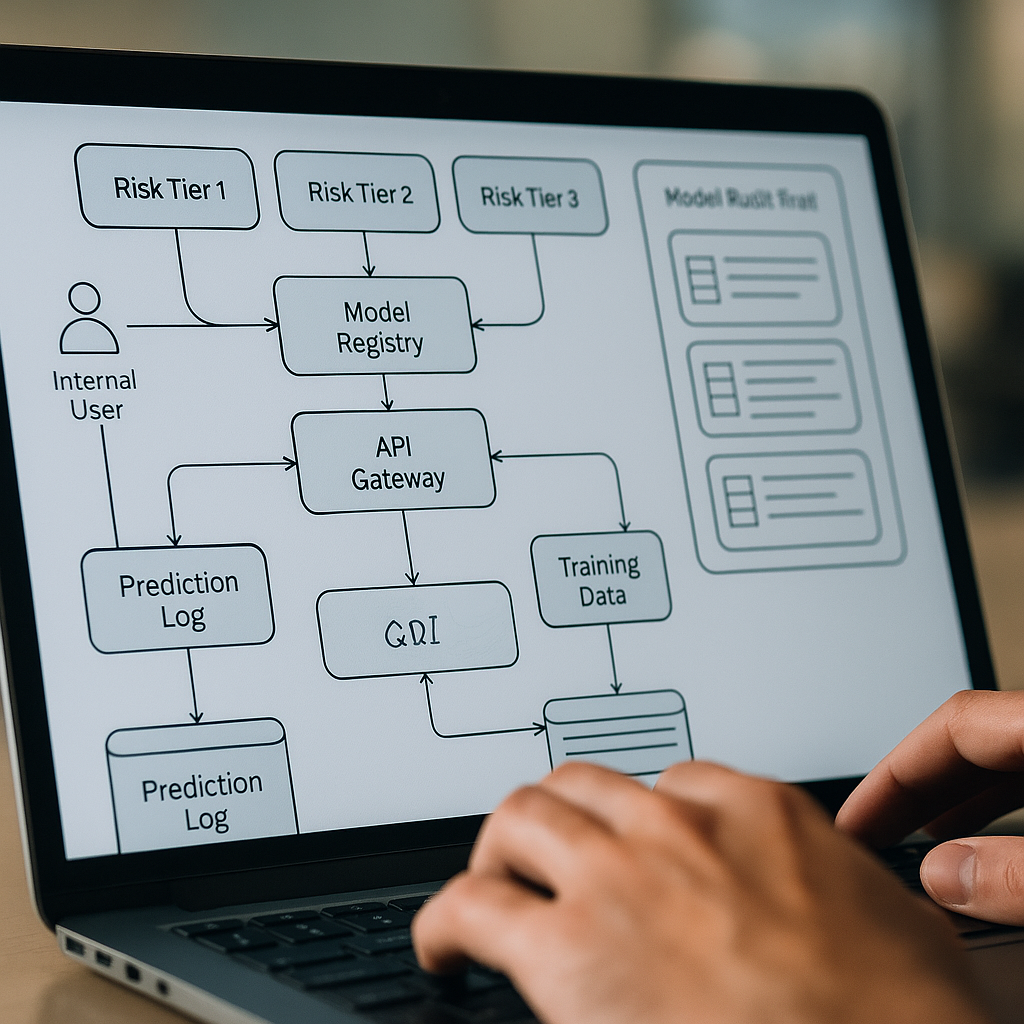
    Product teams building in the high-risk category are discovering that compliance is not a post-launch checkbox. It is an architectural decision that shapes the model’s entire lifecycle. Specifically, high-risk systems must maintain detailed technical documentation, implement human oversight mechanisms, ensure data quality and governance, enable logging sufficient for post-incident review, and pass conformity assessments before market entry. That last point is the one that’s generating the most friction in sprint planning right now.

    I’ve spoken to several engineering leads in the UK who describe the Act’s documentation requirements as, essentially, forcing a level of rigour they should probably have had anyway. One developer at a London RegTech firm described it as “the GDPR moment for machine learning” — painful initially, but ultimately clarifying. The analogy holds up. GDPR changed default data handling practices across the industry; the AI Act is doing the same for model governance.

    What Developers Are Actually Changing in Their Pipelines

    The practical changes happening inside product teams right now fall into a handful of categories.

    Training Data Audits

    High-risk systems must demonstrate that training, validation, and testing datasets meet quality criteria — meaning developers need provenance records for data. Teams are retrofitting data lineage tooling, often finding their existing infrastructure was never built with auditability in mind. This is time-consuming and, frankly, embarrassing for anyone who assumed their scraping pipeline was fine.

    Model Cards and Technical Documentation

    The Act mandates technical documentation covering system purpose, design logic, training methodology, and performance metrics across different user groups. Many teams are adopting something close to Google’s model card format, though UK-developed equivalents are emerging through bodies like the Alan Turing Institute. The documentation must be kept updated — a point that tends to get deprioritised after launch unless someone owns it explicitly.

    Logging and Post-Market Monitoring

    High-risk systems must generate logs enabling reconstruction of their operation over a defined retention period. For regulated sectors like finance or healthcare, this integrates with existing requirements from the FCA or CQC, but for product teams in less regulated verticals, it is entirely new infrastructure. The overhead is non-trivial: storing model inference logs at scale costs real money and requires a data retention policy that legal, engineering, and product all agree on.

    Human Oversight by Design

    This is arguably the most culturally difficult change. The Act requires high-risk systems to be designed so that humans can interpret outputs, intervene, and override decisions. For teams that have been building toward maximum automation, this represents a philosophical u-turn. It is not enough to have a human theoretically in the loop; the system must be legible enough for a non-expert human to make a meaningful intervention.

    Developer reviewing EU AI Act compliance documentation and model risk tier architecture on a laptop
    Developer reviewing EU AI Act compliance documentation and model risk tier architecture on a laptop

    The Conformity Assessment Problem for Smaller Teams

    Large enterprises can absorb the cost of a formal conformity assessment. They have legal departments, compliance officers, and budget for external auditors. A 12-person startup building an AI-driven hiring tool — which falls squarely in the high-risk category — faces the same requirements with a fraction of the resource.

    The European Commission has signalled that it wants to make conformity pathways accessible to SMEs, but the practical infrastructure for that is still being built. In the meantime, UK businesses serving EU markets are largely working with specialist legal firms or leaning on guidance from the UK Government’s AI regulation framework, which takes a lighter-touch approach domestically but acknowledges the Act’s extraterritorial reach for anyone with EU exposure.

    There is a real divergence opening up between UK and EU approaches. Post-Brexit, the UK has opted for a sector-led, non-statutory model for now — meaning the FCA, Ofcom, CQC, and others are each developing their own AI guidance rather than a single overarching law. For UK tech businesses operating in both markets, that means compliance against two different frameworks simultaneously. Not ideal.

    What Businesses Outside Europe Still Need to Know

    EU AI Act compliance tech companies need to understand applies based on where outputs are used, not where the company is based. A UK firm building a recruitment AI that screens candidates in France is subject to the Act’s high-risk provisions. A Belfast startup providing AI-driven credit decisioning to Irish customers has obligations from day one of deployment.

    The key practical steps for any UK business with EU market exposure: identify which risk tier your systems fall into, map your data provenance now rather than retrospectively, appoint someone to own ongoing compliance (not just implementation), and get legal advice before assuming your domestic approach is sufficient.

    Enforcement is still ramping up. National competent authorities in EU member states are being designated and resourced, and the European AI Office is the central body for general-purpose AI models. Fines for non-compliance with high-risk obligations can reach €15 million or 3% of global annual turnover, whichever is higher. For prohibited AI practices, that rises to €35 million or 7%. These are not theoretical numbers.

    The Silver Lining for Builders Who Get Ahead of This

    There is a genuine competitive angle here that does not get discussed enough. EU AI Act compliance tech companies achieve a form of product differentiation in enterprise sales cycles. Procurement teams at large European organisations are already asking for compliance evidence in RFP processes. Being able to demonstrate conformity, robust logging, and documented human oversight is a sales asset, not just a legal obligation.

    The teams I’ve seen handle this best are the ones treating compliance as an engineering discipline rather than a legal problem. They have added compliance requirements to their definition of done, built tooling that generates documentation artefacts as a by-product of normal development, and treat model monitoring as part of production infrastructure. It requires upfront investment, but the operational overhead over time is far lower than bolting compliance on retrospectively.

    The EU AI Act is not going away. It is the most comprehensive AI governance framework in force anywhere in the world right now, and its influence on global standards — including those that will eventually emerge in the UK — is significant. Building to its requirements, even where you are not strictly obliged to, is probably the right engineering call for any team that expects to be operating in five years’ time.

    Frequently Asked Questions

    Does the EU AI Act apply to UK companies that don't operate in Europe?

    If your AI system’s outputs are used by people in the EU, the Act applies regardless of where your business is based. A UK company with no EU office but with EU-based users or clients still has obligations if its AI falls into a regulated risk category.

    What counts as a high-risk AI system under the EU AI Act?

    High-risk systems include AI used in hiring and CV screening, credit scoring, educational assessment, healthcare diagnostics, critical infrastructure, and law enforcement. If your product makes or significantly influences decisions in these areas, you are in the high-risk tier and face the full compliance requirements.

    How much does EU AI Act compliance cost for a small tech business?

    Costs vary widely depending on your system’s risk tier and how much technical debt exists in your current pipeline. For high-risk systems, expect meaningful investment in legal advice, technical documentation tooling, data lineage infrastructure, and potentially an external conformity assessment. Some estimates put initial compliance costs for a small team at £50,000 to £150,000, though this depends heavily on your existing engineering practices.

    What is the difference between the EU AI Act and the UK's approach to AI regulation?

    The UK has opted for a non-statutory, sector-led approach where existing regulators like the FCA, Ofcom, and CQC each develop AI guidance within their domains. The EU AI Act is a single overarching law with cross-sector applicability and significant fines for non-compliance. UK businesses selling into the EU must comply with the Act regardless of the UK’s domestic approach.

    When does EU AI Act compliance actually become mandatory?

    The Act has been phasing in since 2025. Provisions for unacceptable-risk AI applied from February 2025, obligations for general-purpose AI models from August 2025, and high-risk system requirements are rolling in through 2026. If you are building or deploying regulated AI today, compliance obligations are already live for several categories.

  • What the EU AI Act Means for UK Tech Businesses in Practice

    What the EU AI Act Means for UK Tech Businesses in Practice

    The EU AI Act officially entered into force in August 2024, and by August 2026 its most substantial obligations are fully live. For companies headquartered in London, Manchester, Edinburgh or anywhere else in the UK, the temptation is to treat it as someone else’s problem. Post-Brexit, Brussels writes rules for Brussels, right? Not quite. If your product touches EU users, processes data about EU residents, or sits inside a supply chain that terminates in an EU market, the EU AI Act is very much your concern. This piece breaks down what EU AI Act UK businesses actually need to do, without the legal padding.

    UK tech team reviewing EU AI Act compliance documentation in a modern London office
    UK tech team reviewing EU AI Act compliance documentation in a modern London office

    Why the EU AI Act Applies to UK Companies at All

    The Act has explicit extraterritorial reach. Much like the GDPR before it, it applies based on where your AI system’s output is used, not where you are registered. If a UK fintech deploys a credit-scoring model that evaluates EU applicants, or a UK HR platform sells its CV-screening tool to a German employer, those systems fall under the Act’s scope. The relevant test is whether the output is put into service in the EU or whether the affected persons are located in the EU.

    This matters enormously for UK scale-ups that have built their growth story on European expansion. According to Tech Nation, the EU remains the largest export market for British tech, accounting for a substantial share of SaaS and AI product revenues. Ignoring compliance is not a realistic option if you want to keep selling there.

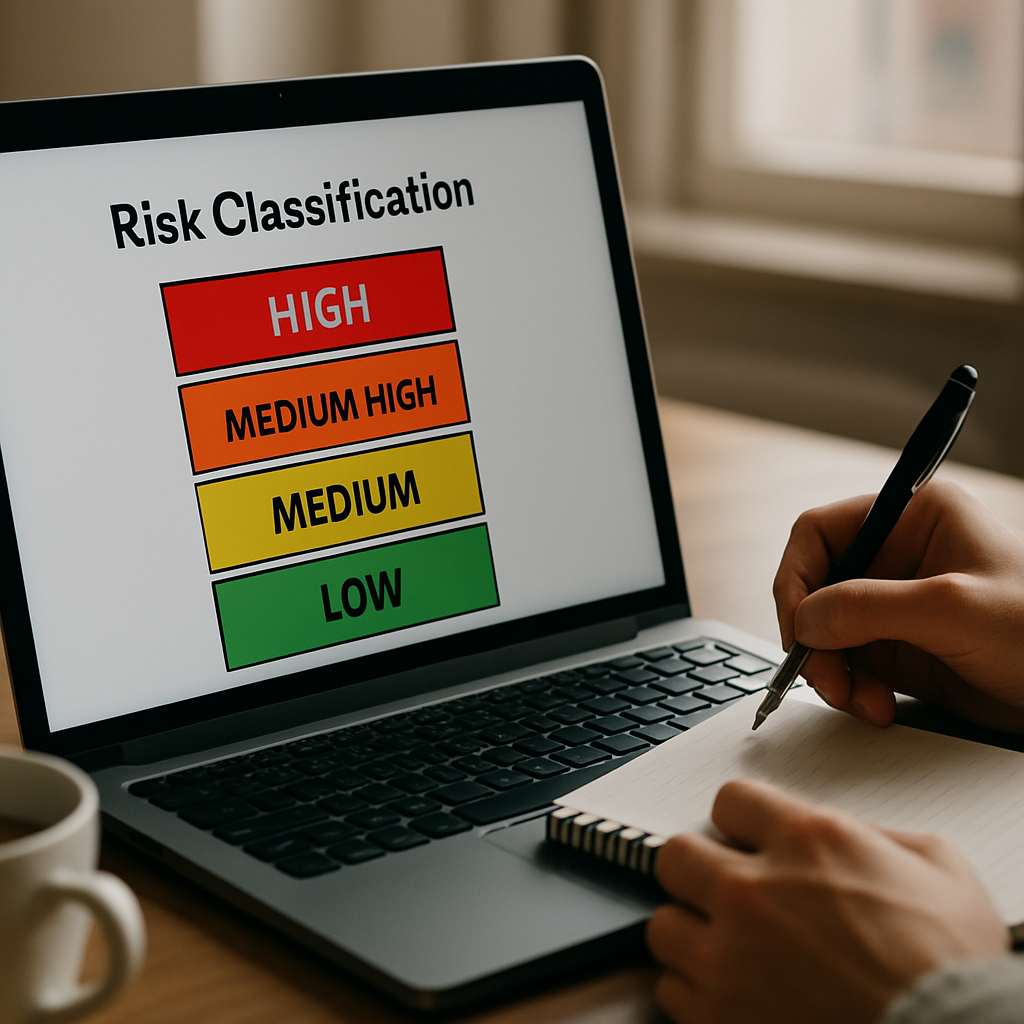
    The Risk Classification System: Where Does Your Product Land?

    The Act divides AI systems into four risk tiers, and which tier you sit in determines almost everything: documentation burden, conformity assessments, human oversight requirements, and whether you can even deploy the system at all.

    Unacceptable Risk (Banned Outright)

    A small set of applications are prohibited entirely. These include real-time biometric surveillance in public spaces (with narrow law enforcement exceptions), social scoring systems, and AI designed to exploit psychological vulnerabilities. Most commercial UK AI products will not sit here. If yours does, the conversation is straightforward: it cannot operate in the EU market.

    High Risk

    This is where most of the compliance weight lands. High-risk systems include AI used in recruitment and employment decisions, credit and insurance underwriting, education and vocational training, critical infrastructure management, and certain aspects of law enforcement and border control. Systems in this category must maintain detailed technical documentation, implement risk management processes, ensure human oversight mechanisms are in place, and register in the EU’s new AI database before deployment.

    For UK businesses, this tier is the practical battleground. A Leeds-based HR tech firm selling automated interview tools to EU employers, or a Bristol insurtech using ML to price policies for EU customers, both face full high-risk obligations. The conformity assessment alone can take several months and requires evidence of training data governance, bias testing, and ongoing monitoring logs.

    Limited and Minimal Risk

    General-purpose chatbots, recommendation engines, and most consumer-facing tools land in the limited or minimal risk tiers. Limited-risk systems primarily face transparency obligations: you must disclose to users that they are interacting with an AI. Minimal-risk systems, such as spam filters or basic analytics, face no specific requirements beyond any existing UK or EU law.

    Risk classification framework used by EU AI Act UK businesses on a laptop screen
    Risk classification framework used by EU AI Act UK businesses on a laptop screen

    General-Purpose AI Models: The Frontier Model Problem

    The Act introduced a distinct category that matters for any UK company building on top of foundation models or developing their own large language models. General-purpose AI (GPAI) models face tiered obligations based on compute thresholds. Models trained with more than 10^25 FLOPs are classed as high-capability and face systemic risk obligations including adversarial testing, incident reporting to the European AI Office, and cybersecurity measures.

    Even if you are not training your own frontier model, if you fine-tune, wrap, or redistribute a GPAI model for EU deployment, you may inherit some obligations depending on how your licence agreement with the upstream provider is structured. This is a genuinely murky area and one that UK legal teams are still working through. The practical advice is to audit your model supply chain now, before the regulator does it for you.

    Practical Compliance Steps for UK Teams

    So what does this actually look like on a product roadmap? A few concrete actions worth prioritising.

    Start with a System Inventory

    List every AI component in your product that touches EU users or EU-based clients. Include third-party tools embedded in your stack. Many UK startups are surprised to discover that an API they call for document processing or language translation falls within scope because the end-user is EU-based.

    Map Each System to a Risk Tier

    Use the Act’s Annex III as a checklist for high-risk applications. The European Commission has published guidance on its official website, and the UK’s own AI Safety Institute has been publishing analysis that, whilst it focuses on UK domestic policy, is useful context. For anything that looks like it might be high risk, get a formal legal opinion sooner rather than later.

    Build Documentation Into Your Development Process

    High-risk systems require technical documentation that can be produced on demand. This is not a one-off PDF; it is living documentation of your training data sources, model architecture decisions, performance benchmarks across demographic groups, and post-deployment monitoring results. Teams using agile sprints should treat documentation as a definition-of-done item, not an afterthought.

    Appoint an EU Representative if Needed

    UK companies without an EU establishment may need to designate a legal representative based in a member state. This mirrors the GDPR Article 27 requirement that many UK businesses already fulfilled. If you have an EU subsidiary or a customer-facing entity in Dublin or Amsterdam, this may already be covered. If not, it is a straightforward appointment but one that requires a written mandate.

    The Strategic Picture: Compliance as Competitive Advantage

    The instinct is to frame EU AI Act compliance as cost and friction. That framing is understandable but incomplete. Enterprise buyers in Germany, France, and the Nordics are already including AI Act compliance status in procurement questionnaires. A UK company that can demonstrate a clean conformity assessment and robust documentation is differentiated from a competitor that cannot.

    There is also a regulatory arbitrage question worth considering. The UK government has so far opted for a sector-specific, principles-based approach to AI regulation rather than adopting horizontal legislation equivalent to the EU Act. The ICO, FCA, and other UK regulators are developing their own guidance within existing frameworks. This gives UK-based builders more domestic flexibility, but it also means that EU AI Act compliance cannot be assumed from UK compliance alone. The two regimes are diverging, and that divergence needs to be managed deliberately.

    For EU AI Act UK businesses operating across both markets, the pragmatic approach is to build to the higher standard, which is currently the EU Act, and document that you have done so. It costs more upfront and less in the long run.

    What to Watch in the Next 12 Months

    The European AI Office is still producing implementing acts and technical standards, particularly around high-risk system requirements. The standardisation bodies CEN and CENELEC are developing harmonised standards that, once published, will provide clearer safe-harbour routes for conformity. UK businesses should track these as they land; building to a draft standard now is better than retrofitting against a final one later.

    Enforcement will also start materialising. The Act allows fines of up to 35 million euros or 7% of global turnover for prohibited AI practices, with lower caps for other violations. Regulators in France and the Netherlands have indicated active intent to use the powers. The first enforcement actions against non-EU companies will send a clear market signal. Being ahead of that moment is worth the effort.

    Frequently Asked Questions

    Does the EU AI Act apply to UK companies after Brexit?

    Yes. The Act has extraterritorial scope and applies to any AI system deployed in the EU or producing outputs that affect EU-based users, regardless of where the developer is based. UK companies selling AI products to EU customers or deploying systems used by EU residents must comply.

    What counts as a high-risk AI system under the EU AI Act?

    High-risk systems include AI used in employment decisions, credit scoring, education assessments, critical infrastructure, and certain healthcare and law enforcement contexts. Annex III of the Act lists the specific categories, and systems falling within them face the most demanding compliance requirements including conformity assessments and registration.

    How long does EU AI Act compliance take to implement?

    For high-risk systems, compliance can take anywhere from three to twelve months depending on the maturity of your existing documentation and testing processes. Lower-risk systems with only transparency obligations are far quicker to address, often a matter of weeks with the right disclosures in place.

    Is UK domestic AI regulation the same as the EU AI Act?

    No. The UK has chosen a sector-specific, principles-based approach rather than a single horizontal law. UK regulators like the FCA, ICO, and CQC apply AI guidance within their existing remits. UK businesses selling into the EU must comply with the EU Act separately; UK compliance does not automatically satisfy EU requirements.

    Do UK startups need an EU representative for the EU AI Act?

    UK companies without an establishment in an EU member state may be required to appoint an authorised EU representative, particularly for high-risk AI systems. This mirrors the GDPR Article 27 requirement and involves a formal written mandate to a person or entity based in the EU.