
The conversation about tech for handmade businesses has levelled up in the UK. Indie makers are no longer just dabbling with social media and a basic online shop. They are quietly building data led, tech enabled operations that still feel artisan on the surface, but run with the efficiency of a lean startup underneath.

Why tech for handmade businesses is no longer optional
Handmade used to mean local craft fairs and word of mouth. Now, buyers expect fast responses, clear stock information, slick checkout experiences and reliable delivery. That expectation gap is exactly where tech for handmade businesses earns its keep.
Three pressures are driving the shift:
- Global competition – UK makers are competing with international marketplaces and mass produced goods that copy the handmade aesthetic.
- Rising costs – Materials, energy and shipping costs have climbed, so margins are thinner and waste hurts more.
- Customer habits – Shoppers browse on phones, expect personalisation and are used to real time order updates.
Without better systems, it is incredibly hard for a small craft brand to keep up with those expectations without burning out.
Core digital foundations for modern makers
The smartest indie brands are quietly building a tech stack that fits their scale, rather than copying what big retailers do. A solid baseline usually includes:
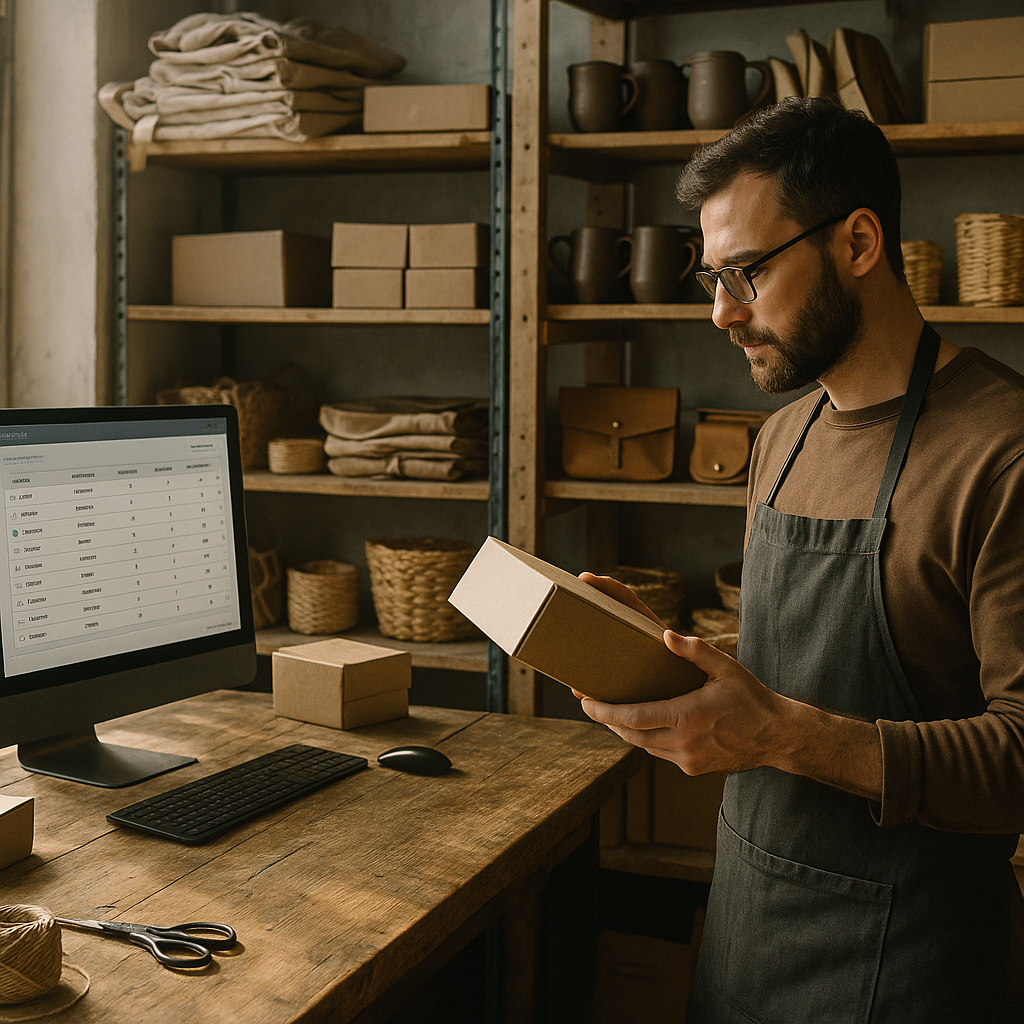
- Cloud based inventory – Even a simple app that tracks stock, materials and made to order items in real time can prevent overselling and disappointed customers.
- Order management – Pulling orders from multiple marketplaces and a standalone webshop into one dashboard saves hours of admin and reduces mistakes.
- Payments and invoicing – Integrated payments, automatic invoicing and basic accounting tools mean makers spend more time creating and less time reconciling spreadsheets.
- Customer data – A lightweight CRM or email platform that stores purchase history and preferences allows personal, relevant communication without creepy tracking.
None of this needs to be enterprise level. The key is choosing tools that talk to each other and can be learned in a weekend, not a quarter.
Using data without killing the craft
Many makers are understandably wary of anything that feels like corporate analytics. Yet a small amount of data can protect the creative side of the business rather than threaten it.
Useful data points for makers include:
- Product profitability – Time tracking plus material costs reveal which lines are secretly loss making.
- Seasonal trends – Simple sales reports show when to build stock, launch new designs or pause slower ranges.
- Channel performance – Comparing conversion and average order value across platforms shows where to focus limited energy.
This is not about optimising every pixel of the brand. It is about ensuring the business side quietly supports the creative work instead of constantly fighting it.
Case in point: handmade bags in a digital world
Accessories are a good example of where tech for handmade businesses can have an outsized impact. A brand like Sallyann Handmade Bags has to juggle fabric sourcing, colourways, limited runs and custom orders, often across multiple sales channels. Without basic digital tools for inventory, pattern tracking and customer communication, that complexity quickly becomes chaos.
By contrast, a maker who uses a simple product information system can log each design, variation and material batch. When a certain pattern sells out, they know exactly how many units were produced, which customers bought them and whether a re run is worth it. The tech is invisible to the shopper, but it is the difference between guesswork and informed decisions.
Automation that keeps the human touch
Automation is often framed as the enemy of authenticity, but for indie makers it can actually protect the human parts of the brand.
Low key, maker friendly automations might include:
- Automatic order confirmation, dispatch and delay updates, written in the maker’s own voice.
- Stock alerts when a best seller is running low, so it can be prioritised in the workshop.
- Follow up emails asking for reviews or sharing care instructions, set once and then left alone.
The goal is to automate the repetitive, predictable interactions so that the truly personal moments – custom design chats, behind the scenes videos, handwritten notes – get more attention, not less.

Tech for handmade businesses FAQs
What is the most important tech for handmade businesses just starting out?
For a new handmade brand, the priority is usually a reliable online shop with clear product information, plus basic inventory tracking so you do not oversell. From there, add simple order management and email tools as sales grow. It is better to master a few tools properly than to bolt on every new app and end up overwhelmed.
How can handmade businesses use data without losing their creative identity?
Treat data as a safety net, not a dictator. Track essentials like product profitability, seasonal demand and channel performance, then use those insights to protect your time and budget for experimentation. Data should help you decide which ideas to double down on, not tell you what to make next.
Is automation suitable for very small handmade businesses?
Yes, as long as automation is used to remove repetitive admin rather than replace personal contact. Simple flows for order confirmations, dispatch updates and review requests can save hours each month. The key is writing them in your own voice and leaving space for manual, human responses where it really matters.