
Cyber insurance requirements have quietly levelled up, and UK businesses that rely heavily on tech are starting to feel the pressure. What used to be a tick-box exercise on a renewal form is now closer to a full security audit. For tech-heavy SMEs, this shift is both a headache and an opportunity to drag security up to modern standards.

Why cyber insurance requirements are tightening
Insurers have been stung by a run of expensive ransomware and data breach claims. Payouts went up, and in many cases the basic controls they expected from clients simply were not there. In response, underwriters have tightened cyber insurance requirements and are treating poor security as a business risk just like faulty wiring or no fire doors.
On the positive side, the market is becoming more mature. Policies are more clearly worded, exclusions are less vague, and insurers are starting to differentiate between organisations with robust controls and those flying blind. For SMEs, that means security posture now has a direct, visible impact on cost and cover.
Common new cyber insurance requirements
While every insurer has its own flavour of questionnaire, several themes are now standard across most cyber insurance requirements. If you run a tech-heavy SME, expect detailed questions in at least these areas:
Multi factor authentication everywhere
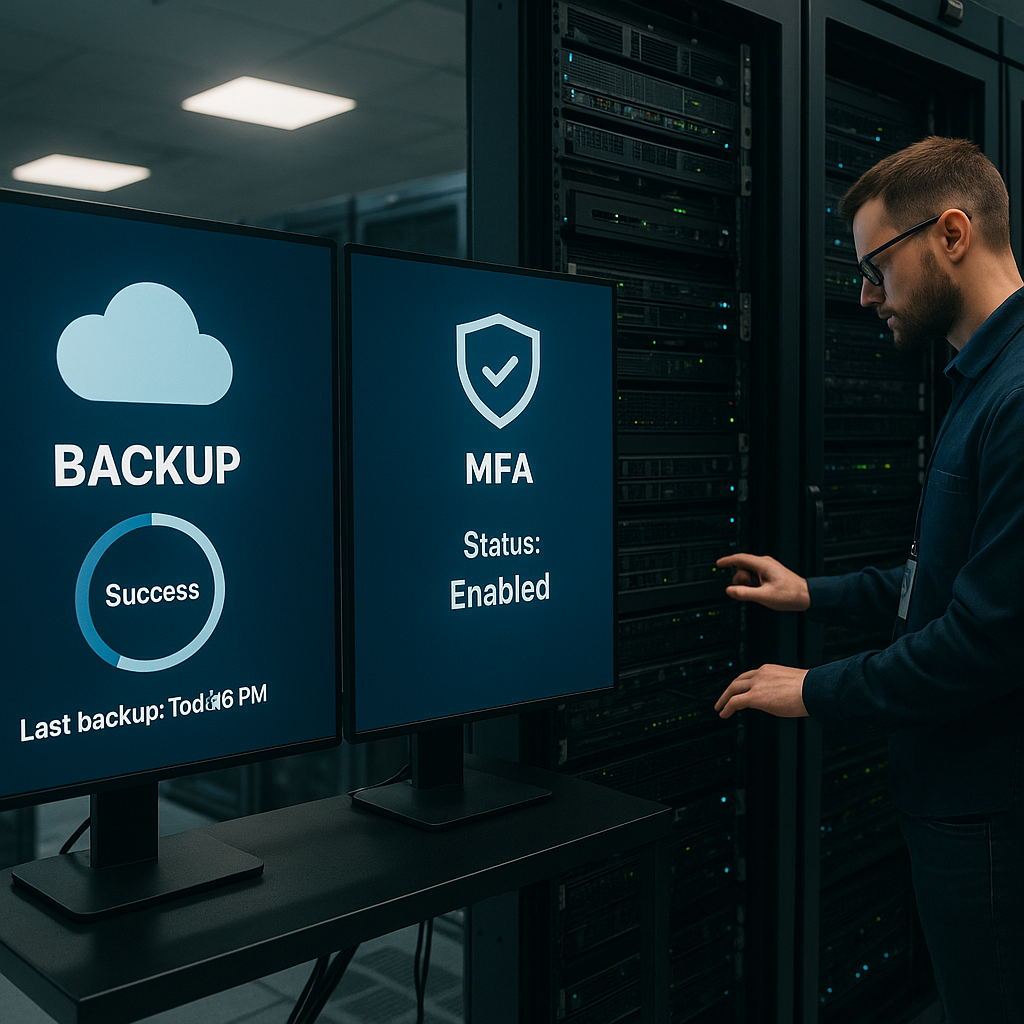
MFA is no longer a nice-to-have. Most policies now expect MFA on email, remote access, admin accounts and key cloud services as a minimum. Some underwriters will flatly refuse cover if privileged accounts do not have MFA enabled. If you are still debating whether SMS codes are enough, you are already behind the curve – app based or hardware token based MFA is rapidly becoming the default expectation.
Backups that actually work
Insurers are no longer satisfied with a vague statement that “we take regular backups”. They want to know how often data is backed up, where it is stored, whether it is immutable or air gapped, and how often you test restores. For many SMEs, the upgrade path has been moving towards immutable cloud backups with strict access controls and documented restore procedures.
Incident response plans on paper, not in heads
A written incident response plan is fast becoming a baseline requirement. That means named roles, clear playbooks for ransomware, data breaches and email compromise, and contact details for internal and external responders. Some insurers will ask whether you have run tabletop exercises in the last 12 months and whether your board has seen and signed off the plan.
Endpoint protection and patching discipline
Legacy antivirus is out, and insurers increasingly expect modern endpoint detection and response tooling across servers and endpoints. They will also ask about patching SLAs: how quickly you apply security updates, how you track missing patches and whether internet facing services are monitored for vulnerabilities.
How premiums and cover are changing
The pricing model is shifting from flat rates to more risk based premiums. Businesses that can demonstrate strong controls are more likely to see stable or only modestly increased costs, while those with weak controls face higher premiums, reduced limits or exclusions for certain types of attack.
Some insurers are introducing tiered policies where specific controls unlock better cover. For example, having MFA and tested backups might reduce your excess for ransomware incidents. Conversely, failing to maintain agreed controls can lead to disputes when claims are made, which is why it is crucial that answers on proposal forms are accurate and kept up to date.
Nerdy security controls that actually help
For tech forward SMEs, this is a chance to geek out in useful ways. Several controls that once felt like overkill are now both practical and insurer friendly:
- Zero trust style access, with strict identity controls and minimal standing privileges.
- Centralised identity management, such as single sign on with conditional access policies.
- Security monitoring that goes beyond basic logs, including alerting on suspicious admin activity.
- Regular phishing simulations and security awareness training backed by metrics.
- Configuration baselines for laptops, servers and cloud environments enforced via code.
These measures not only reduce the chance of an incident but also provide the kind of audit trail insurers like to see when assessing claims.

Cyber insurance requirements FAQs
Why are cyber insurance requirements getting stricter for UK SMEs?
Insurers have seen a surge in costly ransomware and data breach claims, often from organisations with weak basic controls. To reduce risk, underwriters now expect stronger security measures such as multi factor authentication, robust backups and formal incident response plans. These tighter cyber insurance requirements help insurers price risk more accurately and encourage businesses to improve their security posture.
What controls do insurers usually expect before offering cyber cover?
Most insurers now expect multi factor authentication on key systems, reliable and tested backups, modern endpoint protection, a documented incident response plan and a clear patching process for servers and endpoints. Depending on the size and sector of the business, cyber insurance requirements may also include security awareness training, privileged access management and regular vulnerability assessments.
Can better security controls reduce my cyber insurance premium?
Yes, many underwriters are moving towards risk based pricing. If you can demonstrate strong controls that exceed their minimum cyber insurance requirements, you are more likely to secure favourable premiums, better limits and fewer exclusions. Some insurers also offer enhanced terms or reduced excesses where businesses can evidence mature security practices and regular testing of their controls.