

Across UK companies, in‑house teams are quietly turning generative AI in marketing from a novelty into a daily workhorse. It is not replacing marketers, but it is reshaping how copy is written, visuals are created and campaigns are planned.
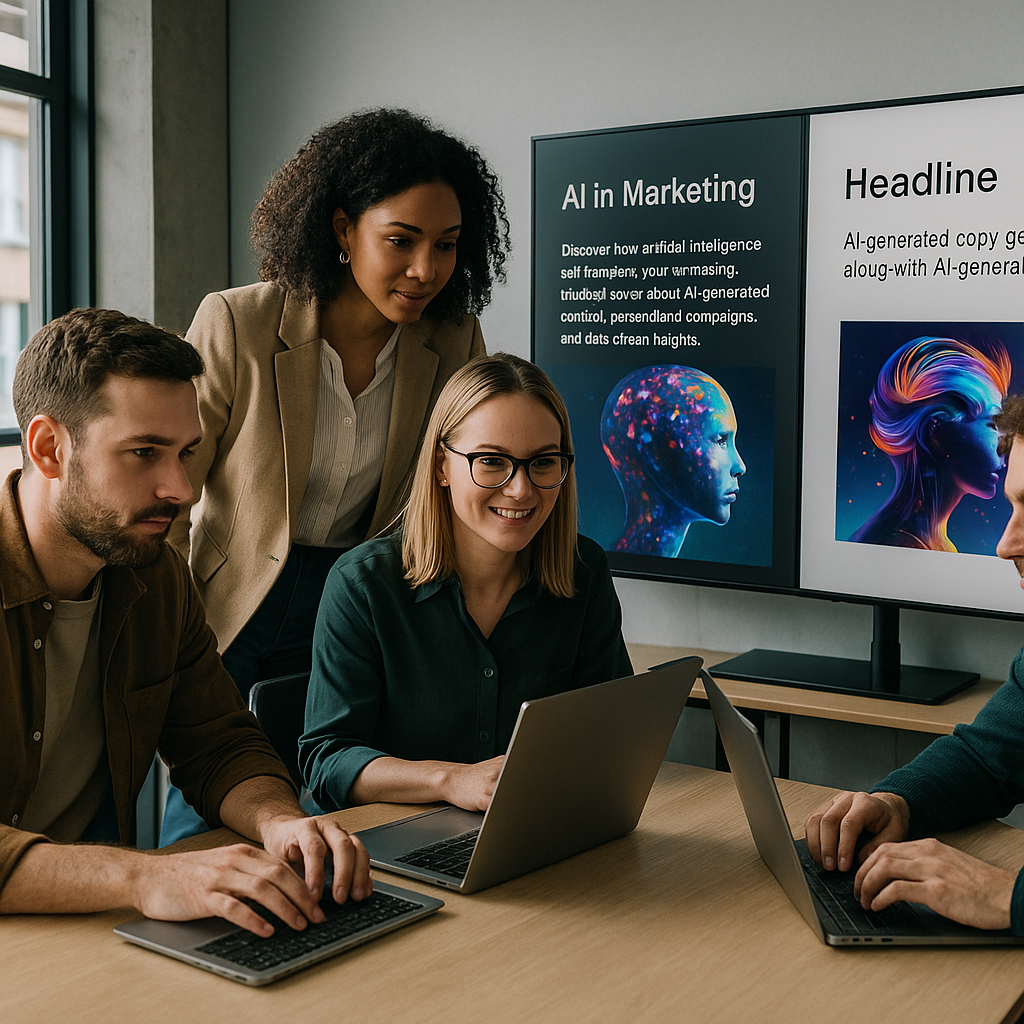
Where generative AI in marketing actually works
The most successful teams treat generative tools as smart assistants rather than magic boxes. They use them heavily for:
- First draft copy for emails, landing pages and product descriptions, which is then edited by humans for tone, accuracy and brand fit.
- Variations at scale, such as multiple subject lines, ad versions and social captions for A/B testing.
- Content repurposing, turning webinars into blog outlines, long reports into social posts, or FAQs into help centre drafts.
- Image concepts, generating moodboards, layout ideas and quick mock‑ups before designers commit to final artwork.
- Campaign scaffolding, like audience segment ideas, rough journey maps and draft content calendars.
Used this way, generative AI in marketing speeds up the boring middle of the process. Marketers spend less time staring at blank documents and more time deciding what is actually worth saying.
Tasks that still demand human oversight
Despite the hype, there are hard limits. In regulated or reputation‑sensitive sectors, teams are learning those limits quickly.
- Brand voice: AI can mimic tone, but it often drifts into generic language. In‑house teams keep humans as final gatekeepers of voice and style.
- Accuracy and risk: Tools can fabricate facts, misinterpret policies or miss cultural nuance. Legal, compliance and subject experts still need to review anything that could mislead or offend.
- Strategy: AI can suggest ideas, but prioritising channels, budgets and positioning still relies on human judgement, data literacy and political awareness inside the business.
- Original thought: Models remix what already exists. Fresh angles, controversial takes and truly new propositions come from people who understand the market.
The pattern is emerging clearly: AI drafts, humans decide. The more sensitive the content, the tighter that human control becomes.
How UK in‑house teams are changing their workflows
Instead of building separate “AI projects”, many marketing departments are embedding tools into existing workflows. Common patterns include:
- Prompt libraries: Shared documents of tested prompts for email copy, persona creation or research summaries, so the whole team can get consistent results.
- Template‑first processes: Standardised briefing templates that plug straight into AI tools, reducing rework and making outputs easier to compare.
- Review stages: Formal sign‑off steps where AI‑generated content is flagged and must be checked for accuracy, bias and brand alignment.
- Hybrid brainstorming: Teams run a quick AI idea dump, then hold a human workshop to critique, combine and refine the best suggestions.
For images, many in‑house designers are using generative tools for early‑stage concepting. They generate rough compositions, colour schemes or layout ideas, then recreate the chosen direction properly in their usual design software. This keeps creative control in human hands while shortening the exploration phase.
Skills modern marketers now need around generative AI in marketing
Job descriptions for in‑house roles are quietly shifting. Instead of asking if candidates have “experience with AI”, hiring managers are looking for specific capabilities.
- Prompt design and iteration: The ability to ask the right questions, provide structured context and iteratively refine outputs.
- Critical evaluation: Spotting hallucinated facts, weak arguments, biased assumptions and off‑brand language.
- Data fluency: Understanding how training data, privacy and analytics affect what the tools can and cannot safely do.
- Workflow thinking: Knowing where to insert AI in a process so it speeds things up without breaking quality controls.
In practice, this is creating hybrid roles. Content specialists are becoming part editor, part AI operator. Designers are becoming part art director, part toolsmith. Marketing operations teams are being asked to own governance, access controls and usage guidelines.
Governance, ethics and the UK context
UK companies also need to think about regulation, data protection and public trust. In‑house teams are starting to define rules such as:
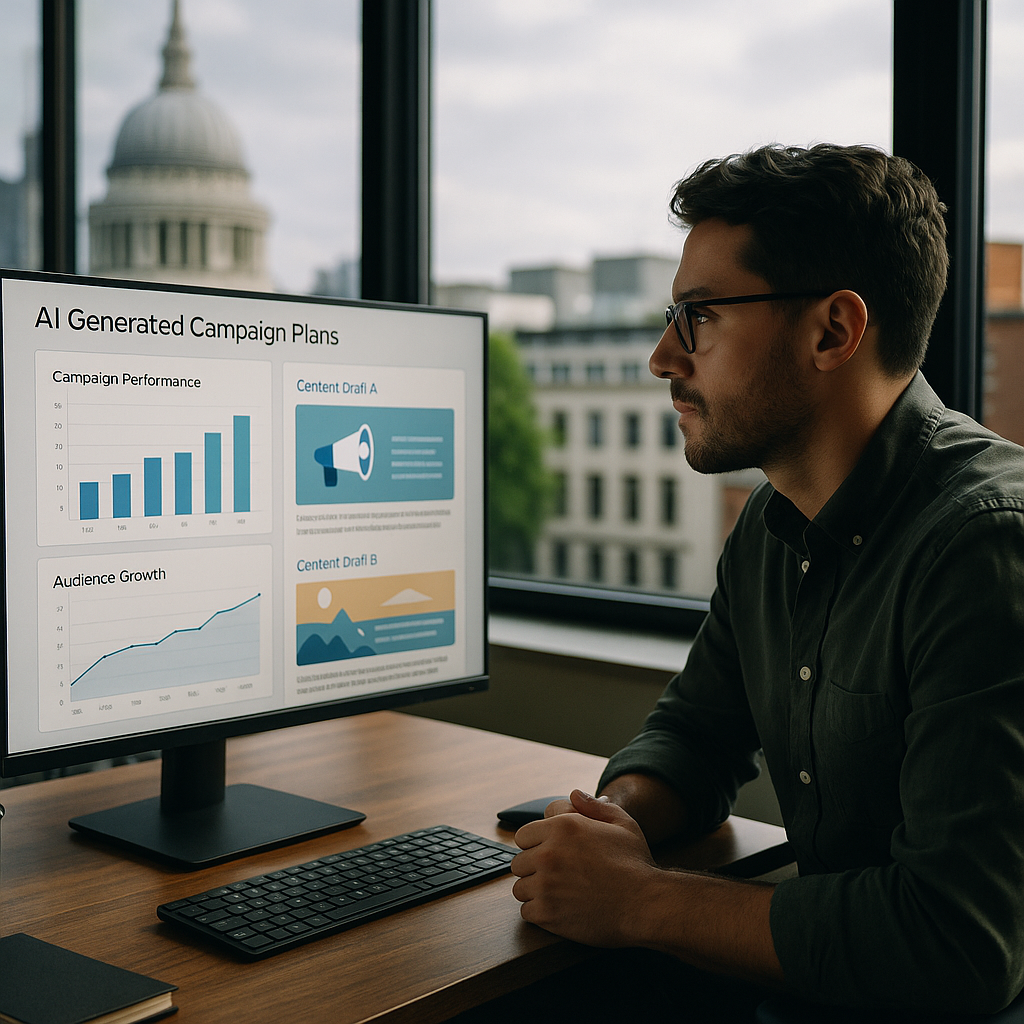

Generative AI in marketing FAQs
How are UK in‑house teams starting with generative AI in marketing?
Most UK in‑house teams start small with generative AI in marketing by using it for low‑risk tasks such as internal drafts, idea generation and content repurposing. They gradually move to customer‑facing work only after they have clear review processes, prompt templates and sign‑off rules in place.
Will generative AI in marketing replace copywriters and designers?
Current usage suggests that generative AI in marketing is augmenting copywriters and designers rather than replacing them. It takes over repetitive drafting and concepting work, while humans focus on strategy, originality, brand voice and final quality control. Roles are shifting, but the need for skilled specialists remains strong.
What risks should UK companies consider when using generative AI in marketing?
Key risks include inaccurate or fabricated information, biased or insensitive content, misuse of customer data and unclear accountability if AI‑assisted campaigns cause harm. UK companies should set governance policies, involve legal and compliance where needed, and ensure that all AI‑generated marketing materials receive human review before publication.
Leave a Reply