
The edge computing vs cloud 2026 debate has moved well past the hype-cycle stage. Businesses are no longer asking whether cloud is the future; they already know it is part of the infrastructure furniture. The real question now is where the cloud’s limits become a problem, and whether pushing compute to the edge actually fixes those problems or just creates new ones. The honest answer: it depends on what you’re building, where your data lives, and how much latency you can actually tolerate before it costs you money.
This is not a binary choice. Most production environments in 2026 sit somewhere on a continuum between fully centralised cloud and fully distributed edge. But the trade-offs are real, and getting the balance wrong is expensive. Let’s walk through what actually matters.
What Edge Computing Actually Means in Practice
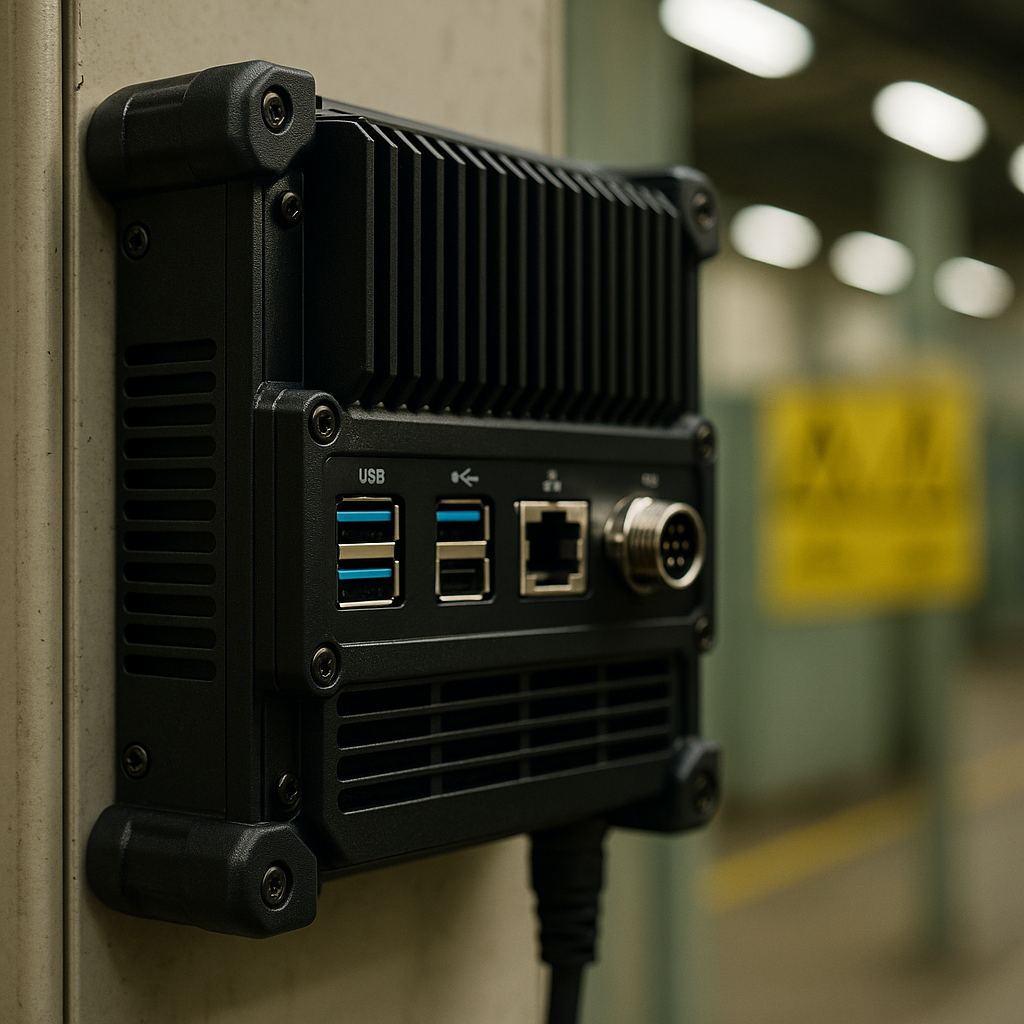
Edge computing means running processing closer to where data is generated, rather than routing everything back to a central data centre. That could be a server rack inside a factory in Sunderland, a ruggedised compute unit on a construction site in Bristol, or a smart traffic management node on the A406. The principle is the same: reduce the distance data has to travel before something useful happens to it.
This matters because round-trip latency to a cloud data centre, even a nearby AWS region in London or a Microsoft Azure zone in Wales, still introduces delays measured in milliseconds. For most business applications, that is irrelevant. For a manufacturing line doing real-time quality inspection at 200 parts per minute, it is not. The edge case (yes, the pun is deliberate) is almost always about time-sensitivity.
Where Cloud Infrastructure Still Dominates
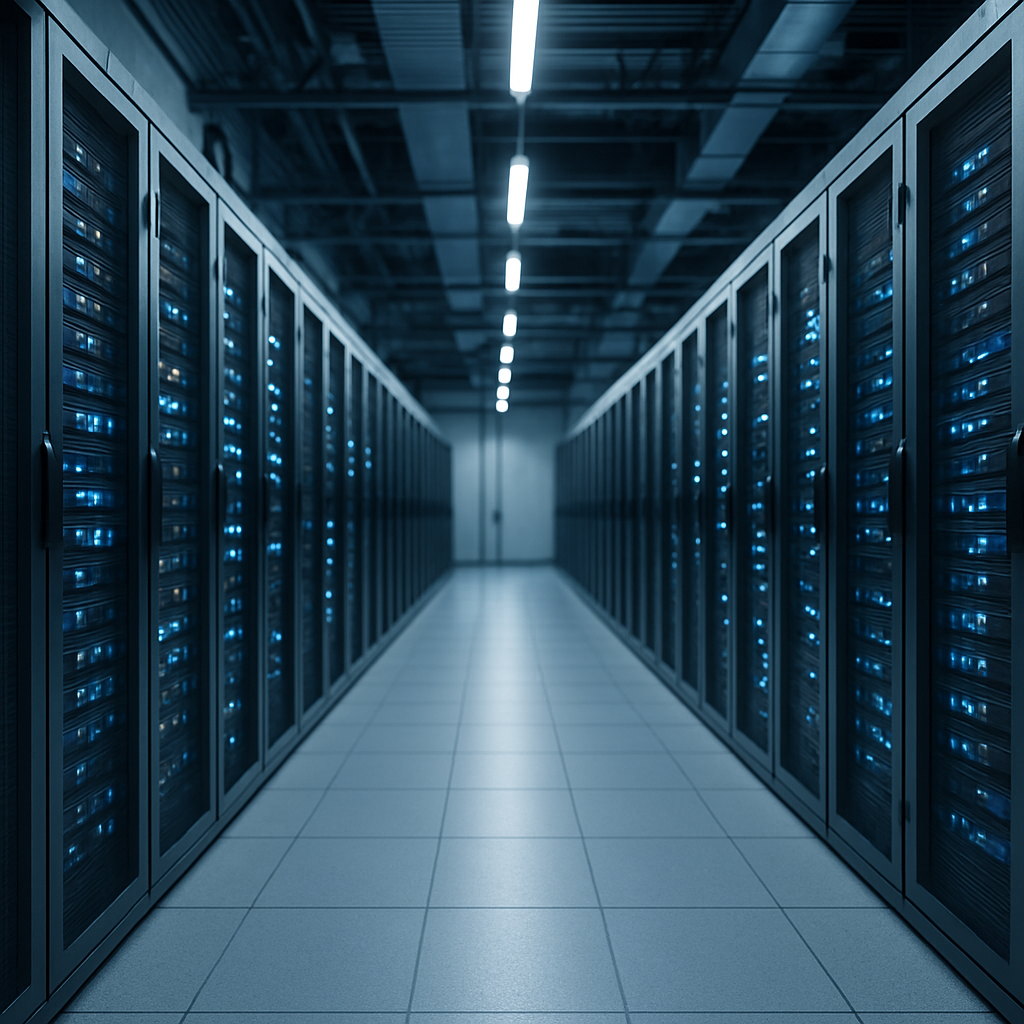
Cloud wins on almost every dimension when your workload is not time-critical. The elasticity is genuinely transformative. A UK e-commerce retailer that processes ten times its normal transaction volume over the Christmas period does not need to own hardware for that peak; it spins up additional capacity on demand and pays only for what it uses. That scalability model has proven its worth repeatedly, and no serious engineer is arguing against cloud for that kind of workload.
Cost at scale is another cloud advantage that often gets underplayed. Running and maintaining physical edge infrastructure is not cheap. You need hardware procurement, on-site engineers, firmware update cycles, physical security, and a strategy for what happens when a unit fails in a remote location. Cloud providers absorb those operational costs into a service model. For a 50-person scale-up in Manchester, owning that operational burden makes very little sense.
Cloud also wins on tooling maturity. The observability stack, the CI/CD pipelines, the managed database options, the machine learning platforms: all of it is richer and more battle-tested on the major cloud providers than anything you would build at the edge today. If your engineering team already lives in AWS or Google Cloud, the cognitive overhead of extending to edge infrastructure is substantial.
The Latency Argument for Edge: When Milliseconds Matter
The strongest argument for edge computing is latency-sensitive workloads, and this is where the edge computing vs cloud 2026 conversation gets genuinely interesting. Manufacturing is the obvious sector, but it is far from the only one.
Think about a logistics company running computer vision on warehouse conveyor belts. Processing that video stream in the cloud introduces enough lag to make real-time defect detection impractical. Running inference on an on-premise GPU cluster next to the belt removes that constraint entirely. The same logic applies to port operations, automated retail checkout systems, and live broadcast production, an area where UK media companies including ITV and the BBC have been quietly expanding edge deployments for live events.
The telecoms sector is particularly relevant here. The rollout of 5G across UK cities is gradually enabling multi-access edge computing, where compute nodes sit inside or directly adjacent to mobile base stations. Ofcom’s infrastructure data shows 5G outdoor coverage reaching over 75% of UK premises by late 2025, which is laying the groundwork for edge-enabled applications that were not viable two years ago. You can read Ofcom’s connected nations reporting at ofcom.org.uk.
Security and Data Sovereignty: The Edge Advantage Nobody Talks About Enough
GDPR compliance and data sovereignty have reshaped how UK businesses think about where their data actually sits. Processing sensitive data at the edge, keeping it local to the point of generation and never transmitting it to a third-party cloud region, removes a whole category of compliance risk. This is particularly relevant for healthcare organisations, financial services firms operating under FCA rules, and any business handling biometric or special-category data.
Cloud providers have responded with regional data residency guarantees and sovereign cloud offerings. Microsoft, for instance, operates Azure data centres in the UK South and UK West regions with specific data residency commitments. But those guarantees come with configuration complexity, and the shared responsibility model means security mistakes on the customer side still happen. Edge deployments, when implemented properly, can offer a simpler security perimeter, but that simplicity cuts both ways: you own the physical security of those devices, and hardware in the field is vulnerable to tampering in ways that a cloud data centre is not.
Hybrid Architecture: The Realistic Middle Ground
The most production-ready architecture for most mid-to-large UK businesses in 2026 is not edge or cloud; it is a hybrid model where the split is determined by workload characteristics rather than ideology. Time-sensitive inference runs at the edge. Training, aggregation, analytics and storage run in the cloud. Orchestration tooling, Kubernetes at the edge via K3s or similar lightweight distributions, keeps the two layers talking to each other without requiring bespoke integration for every deployment.
Costs in this model are genuinely hard to predict upfront, which is a legitimate concern. Cloud spend is variable and metered; edge hardware is a capital expense with a depreciation curve. A decent rule of thumb: if a workload will run continuously for more than two to three years, the total cost of ownership for edge hardware often undercuts equivalent cloud compute. Below that horizon, cloud almost always wins on pure economics.
Which Model Should UK Businesses Actually Choose?
The honest answer is that the choice is rarely as dramatic as the vendor marketing suggests. Cloud providers want you to run everything in their platform; edge hardware vendors want you to believe the network is the bottleneck for everything. Neither framing is entirely accurate.
Start with the workload. If you are building a SaaS product, a data analytics platform, or a business intelligence tool, cloud is the right default and edge adds unnecessary complexity. If you are deploying operational technology in physical environments, running real-time inference on sensor data, or processing video at scale in a location with unreliable connectivity, edge compute deserves serious consideration. The question is always what fails when the latency or connectivity is not there, and how much that failure costs.
The businesses getting this right in 2026 are not the ones who picked a camp. They are the ones who mapped their workloads honestly, understood their compliance constraints, and built infrastructure that reflects that reality rather than a vendor’s preferred architecture diagram.
Frequently Asked Questions
What is the main difference between edge computing and cloud computing?
Cloud computing processes data in centralised data centres accessed over the internet, while edge computing processes data locally, close to where it is generated. The key trade-off is latency versus operational simplicity: edge is faster for time-sensitive tasks, but cloud is easier to scale and manage.
Is edge computing more expensive than cloud for UK businesses?
It depends on the workload duration and volume. Edge hardware is a capital expense upfront, but for continuous, high-volume workloads running over several years, the total cost of ownership can undercut cloud compute fees. For shorter-term or variable workloads, cloud is usually cheaper.
How does edge computing help with GDPR compliance?
By processing sensitive data locally and never transmitting it to a third-party cloud region, edge deployments can reduce data sovereignty risk under UK GDPR. This is particularly relevant for healthcare, financial services, and any business handling biometric or special-category personal data.
What industries benefit most from edge computing in 2026?
Manufacturing, logistics, telecoms, media production, and retail are seeing the strongest edge adoption. Any sector where real-time decision-making on physical data, such as machine vision, live video processing, or sensor telemetry, is central to operations tends to benefit most.
Can you use both edge and cloud computing at the same time?
Yes, and most mature deployments do exactly this. Hybrid architectures route time-sensitive inference to edge nodes while using cloud for training, storage, analytics, and aggregation. Lightweight orchestration tools like K3s make it increasingly practical to manage both layers from a single control plane.