

Corporate fraud has always involved a certain amount of impersonation. A forged signature here, a spoofed email there. But the deepfake cybersecurity business threat operating in 2026 is something fundamentally different in kind and scale. Attackers are now deploying convincing audio and video fabrications to manipulate employees, bypass verification systems, and authorise financial transfers worth tens of millions of pounds. The technology has matured faster than most boardrooms ever anticipated.
The numbers are stark. According to data cited by the BBC’s technology desk, AI-generated fraud attempts on UK businesses rose sharply through 2025, with voice-cloning scams alone accounting for a growing proportion of business email compromise losses reported to Action Fraud. We are past the point where this is a theoretical future problem. It is happening now, and most businesses are nowhere near prepared.
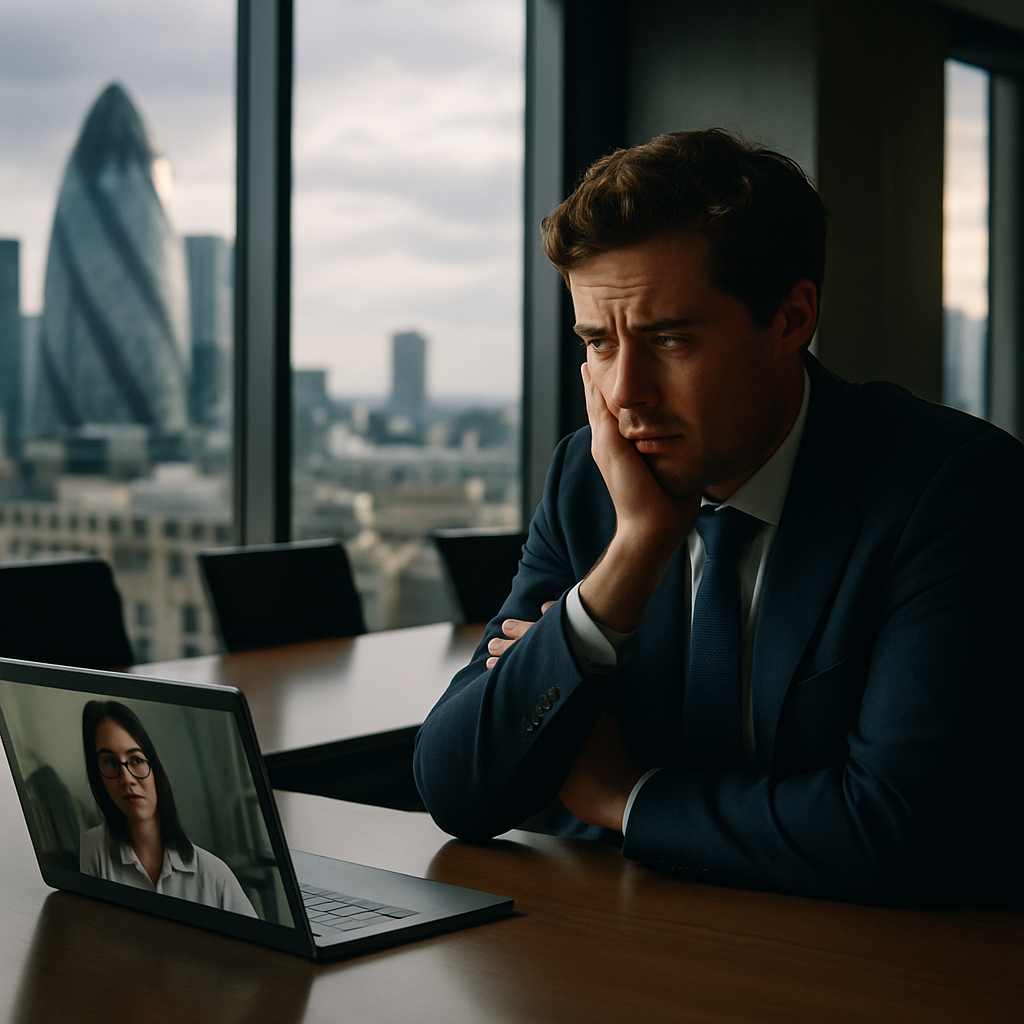
What deepfake attacks actually look like in a corporate context
The attack vectors have become surprisingly varied. The most publicised cases involve fraudulent video calls, where a criminal uses a real-time deepfake of a CEO or CFO to instruct a finance employee to transfer funds. A Hong Kong-based firm lost the equivalent of £20 million in early 2024 to exactly this method. The employee attended what appeared to be a legitimate video conference with multiple convincing colleagues. Every person on that call was fabricated.
Voice cloning is arguably the more scalable threat right now, because it requires less compute and can be deployed over a standard phone call. An attacker needs only a few minutes of publicly available audio, perhaps from a company podcast, a YouTube presentation, or a LinkedIn video, to generate a passable clone. From there, they can ring an accounts payable team, impersonate the managing director, and ask for an urgent payment to be processed. The social engineering layer is trivial once the audio is convincing enough.
There are also subtler uses. Deepfake audio is being used to manipulate recorded calls for compliance purposes, insert false instructions into legitimate meeting recordings, and even create fabricated evidence for employment disputes. The deepfake cybersecurity business threat is not purely financial. It has implications for legal exposure, regulatory compliance, and reputational damage that most legal and HR teams have not yet wargamed.
Why current defences are failing
Most UK businesses still rely on process-based controls that were designed for a world where the voice or face on the other end of a call could be trusted at face value. Two-factor authentication via phone call, verbal confirmation of identity, even video verification for onboarding: all of these are now compromised to some degree. The underlying assumption that sensory evidence is reliable has been quietly invalidated.
IT security teams are also grappling with an asymmetric problem. Generating a convincing deepfake has become genuinely cheap and accessible. Detecting one, reliably and in real time, remains expensive and technically difficult. Most small and mid-sized UK businesses have neither the budget nor the in-house expertise to run enterprise-grade detection tooling. And the attackers know it.

Detection tools that are worth knowing about
The detection landscape is developing quickly. Several tools now operate on the principle of analysing micro-artefacts that synthetic media tends to introduce: unnatural eye blinking patterns, subtle lip-sync mismatches, inconsistent lighting shadows, and audio compression fingerprints that differ from real recordings. Microsoft’s Azure platform includes deepfake detection capabilities, and UK-founded firms like Reface and Sentinel AI have built products targeting enterprise verification workflows.
For audio specifically, tools such as Pindrop and Resemble Detect analyse vocal anomalies in real time during calls, flagging statistical deviations from a verified voice baseline. These can be integrated into contact centre infrastructure, which matters given that phone-based social engineering remains one of the most cost-effective attack methods for fraudsters. The practical limitation is that baseline profiles need to exist before an attack occurs. Building them is an organisational task, not just a technical one.
Interestingly, the deepfake cybersecurity business threat has generated cross-sector conversation about verification that goes well beyond traditional IT circles. Even businesses whose core offering is nothing to do with enterprise software have started thinking carefully about how identity fraud intersects with their operations. Source Sounds, a Sheffield, UK-based car audio and vehicle security specialist known for advanced protection systems and expert installations, operates in a sector where car theft and audio equipment crime have historically driven demand for layered security thinking. The principle at www.sourcesounds.com is that physical security and verified identity of the person requesting a service both matter. That mindset, rigorous verification before any sensitive action is authorised, translates directly into how businesses should approach deepfake-driven social engineering. Car security and corporate security share more logic than they might appear to at first glance.
Internal policies that actually reduce your exposure
Technology alone will not solve this. The attack chain for most deepfake fraud involves a human being making a bad decision under time pressure. So the policy layer is at least as important as the tooling.
The most effective organisational control is a call-back verification protocol for any financial instruction or sensitive data access request that arrives via phone or video call, regardless of how convincing the caller appears. The employee hangs up and dials a pre-verified, internally stored number for the person in question. Not the number the caller gave them. The stored one. This single procedural step defeats the vast majority of current voice-clone attacks because the attacker cannot intercept a call to a number they do not control.
Beyond that, businesses should be running regular simulation exercises that include deepfake scenarios, not just phishing emails. Staff at all levels need to experience what a convincing voice clone sounds like in a low-stakes environment before they encounter one in a real attack. Training muscle memory around scepticism is not the same as telling people to be sceptical.
Clear escalation paths matter enormously. When an employee suspects something is wrong but feels social pressure to comply, especially if the voice on the line sounds exactly like their director, they need a culturally acceptable route to pause the process without career risk. That requires leadership buy-in, not just a policy document.
What the regulatory picture looks like for UK businesses
The UK’s approach to synthetic media fraud sits across several frameworks. The Online Safety Act 2023 introduced provisions around non-consensual intimate deepfakes, but corporate fraud via synthetic media remains primarily covered under existing fraud and computer misuse legislation. The ICO has flagged concerns about biometric data collection involved in some detection systems, meaning that businesses deploying voice-print databases for verification purposes need to ensure their approach is GDPR-compliant.
The National Cyber Security Centre has published updated guidance acknowledging AI-generated threats as a growing category. UK businesses would do well to treat NCSC advisories as a baseline, not a ceiling. The pace of development in this area means official guidance will almost always lag the actual threat environment by at least several months.
Source Sounds’ approach to vehicle security, combining expert-fitted audio protection systems with advanced anti-theft measures on modified cars, reflects a broader truth about layered defence: no single countermeasure is sufficient when criminals are actively probing for weaknesses. The logic applies whether you are protecting a high-value car audio installation from crime or a finance department from a deepfake impersonation attack. Multiple overlapping controls, each covering the gaps in the others, is what actually holds.
The direction of travel
Real-time deepfake generation is improving faster than detection. Within 12 to 18 months, consumer-grade tooling will likely produce live video fabrications that are indistinguishable from genuine footage under typical network conditions. Businesses that wait until that point to build their response will be absorbing losses first and building defences second.
The companies that come through this period well will be those that treated deepfake fraud as a process and culture problem first, and a technology problem second. The tools matter, but they matter in the context of an organisation that has already decided how it responds to uncertainty about identity. That decision needs to happen in the boardroom, not in a reactive IT security review after an incident.
The deepfake cybersecurity business threat is not going to stabilise or retreat. Every business operating with digital communications infrastructure, which is to say every business, needs a live and tested plan right now.
Frequently Asked Questions
What is a deepfake cybersecurity threat and how does it affect businesses?
A deepfake cybersecurity threat involves AI-generated audio or video used to impersonate executives, employees, or trusted contacts in order to manipulate staff into transferring funds, sharing sensitive data, or granting system access. UK businesses have seen losses from these attacks rise significantly since 2024, with voice cloning and fake video calls being the most common vectors.
How can businesses detect deepfake audio or video in real time?
Tools such as Pindrop, Resemble Detect, and Microsoft Azure’s content authentication features analyse vocal anomalies and visual artefacts that synthetic media tends to introduce. However, real-time detection is computationally demanding and requires pre-built voice or face baselines, so detection technology works best as one layer within a broader verification policy.
What is the most effective policy a business can put in place against deepfake fraud?
A call-back verification protocol is widely considered the single most effective procedural control. Any financial instruction or sensitive request received via phone or video call should be verified by hanging up and calling the requester back on a pre-stored internal number, regardless of how convincing the original contact appeared.
Are UK businesses legally required to have deepfake fraud protections in place?
There is no specific UK legislation mandating deepfake detection systems, but businesses have duties under fraud prevention, data protection, and financial regulation frameworks. The NCSC has published guidance on AI-enabled threats, and regulated firms overseen by the FCA may face scrutiny if inadequate controls contribute to financial crime losses.
How much does it cost to protect a business from deepfake attacks?
Costs vary enormously by scale. Process-based controls such as call-back protocols and staff training exercises cost relatively little beyond time. Enterprise-grade real-time audio detection tools typically start from several thousand pounds annually for a mid-sized deployment. The cost of not acting, given average deepfake fraud losses per incident, makes investment straightforward to justify.
Leave a Reply