
There are roughly 35 million smart meters installed across Great Britain, with the rollout still grinding forward under government mandate. That is a staggering volume of granular consumption data, pulsing out readings every 30 minutes, sitting behind APIs that most UK tech firms have barely glanced at. The smart meter data UK business opportunity is quietly becoming one of the more underrated market plays of 2026, and the companies paying attention are starting to build serious infrastructure on top of it.
The scaffolding enabling all of this is Ofgem’s data access framework, built around the Data Communications Company (DCC) and its secure network for meter data retrieval. It is not glamorous infrastructure. It is not the kind of thing that gets venture capitalists excited at demo day. But what it represents, in practical terms, is a standardised, regulated pipeline of half-hourly consumption data for tens of millions of properties and business premises across England, Wales, and Scotland.
What Ofgem’s Data Access Rules Actually Unlock
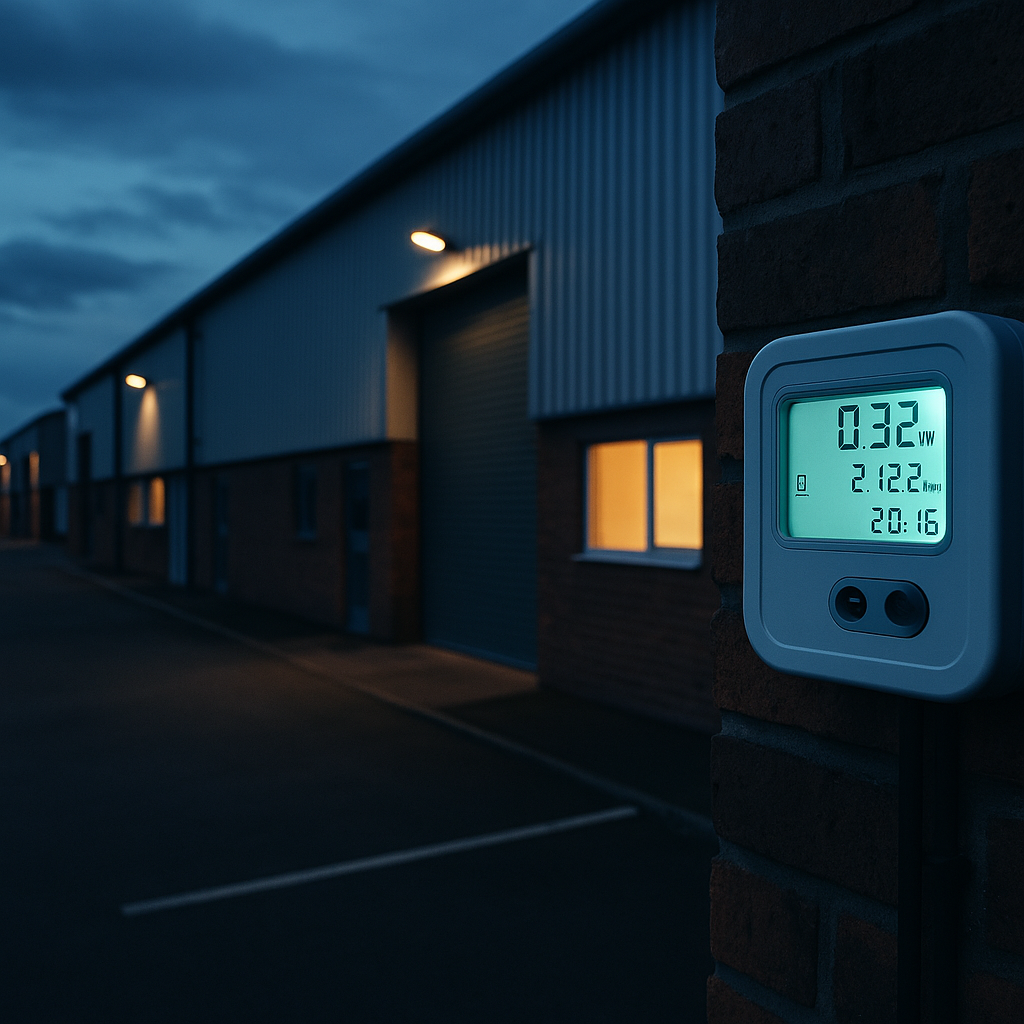
Ofgem has been progressively expanding third-party access to smart meter data since the early 2020s, operating through the Smart Energy Code and associated licence conditions. The framework requires consumer consent, but once granted, it allows accredited organisations to pull genuine half-hourly interval data, not estimated reads. For businesses, this shifts the conversation entirely.
Historically, business energy data was a mess. Manual meter reads, estimated bills, quarterly reconciliations. Even larger commercial sites were operating on data that was weeks or months old by the time it influenced any decision. Half-hourly data from SMETS2 meters changes the feedback loop completely. You are now working with data that is almost real-time, structured, and consistent across suppliers. That is the kind of raw material that makes analytics platforms genuinely useful rather than decorative.
Ofgem’s ongoing work on consumer and market protections signals a regulator that is increasingly serious about energy market transparency. The direction of travel is clear: more data access, more competition, and more expectation that innovation will follow.
The Three Markets Actually Forming Around This Data
I have been watching three distinct commercial layers develop on top of smart meter data infrastructure, each at a different stage of maturity.
Energy Analytics for Commercial Premises
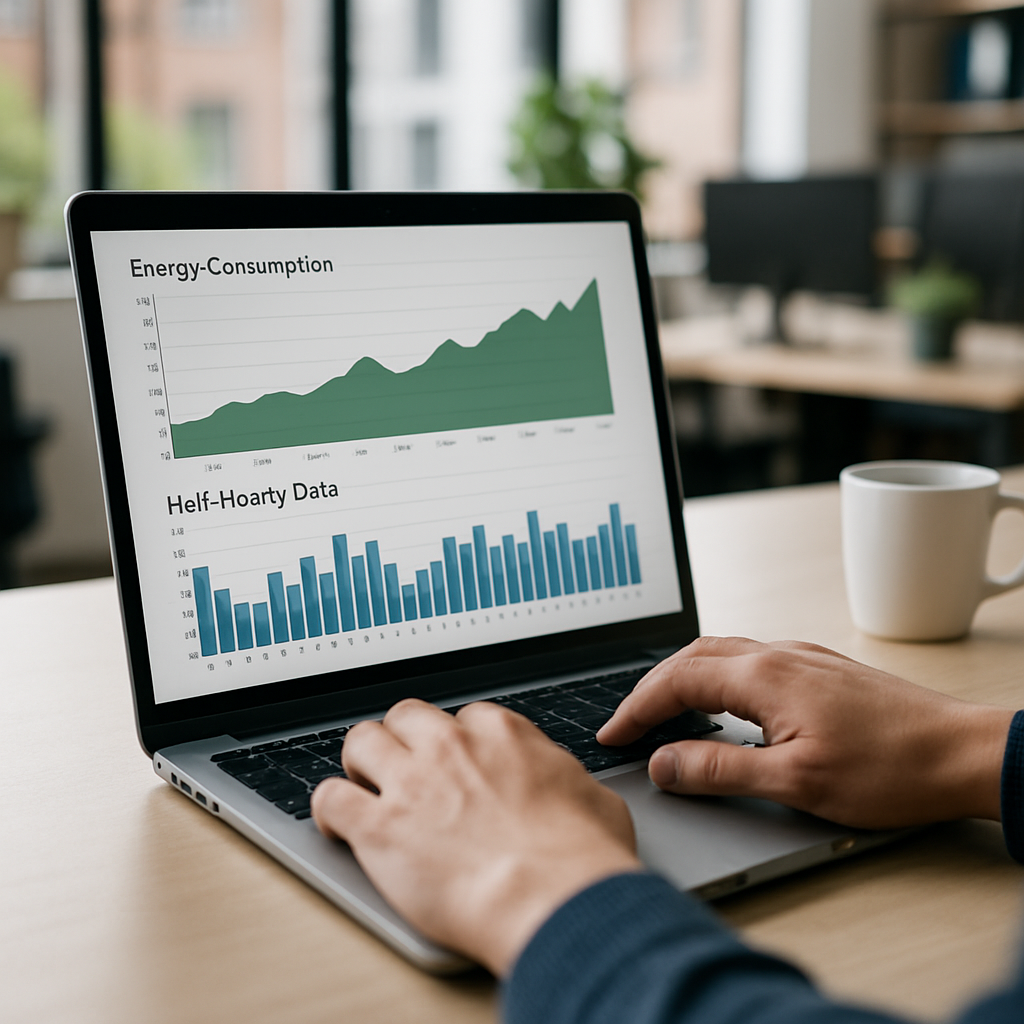
The most immediate opportunity is B2B energy analytics. Small and medium-sized businesses across the UK are sitting on energy bills they do not fully understand, with no visibility into intraday consumption patterns. A SaaS platform that ingests half-hourly DCC data, normalises it against weather data from the Met Office, and produces a simple weekly digest showing anomalies and waste is genuinely valuable to a pub group, a small manufacturer, or a chain of dental practices.
Companies like Squeaky Clean Energy and Pilio have been working in adjacent spaces, but the surface area remains enormous. There is no dominant B2B energy analytics platform for the SME segment yet. The smart meter data UK business opportunity here is essentially greenfield for anyone prepared to work within the regulatory framework.
Demand-Response Platforms and Grid Flexibility
This is where it gets genuinely interesting from a systems perspective. National Grid ESO (now transitioning into NESO, the National Energy System Operator) has been building out flexibility markets. Demand-side response, where commercial and industrial energy users agree to reduce or shift consumption at peak times in exchange for payments, has historically required bespoke hardware and complex contracts. Smart meter data collapses some of that complexity.
If you can pull half-hourly consumption data from a cluster of commercial sites, model their baseline demand with reasonable accuracy, and automate curtailment signals via building management systems or process controls, you have the core of a demand-response aggregation platform. Firms like Flexitricity and Kiwi Power have been doing versions of this for years at the large industrial scale. The smart meter data layer now makes it viable for mid-market commercial portfolios where the economics previously did not stack up.
Embedded Finance and Insurance Products
The third layer is less obvious but potentially the most lucrative. Consumption data is behavioural data. A business that runs its premises with consistent, predictable consumption patterns is a different credit risk from one showing volatile, irregular spikes. Several fintech firms are already exploring whether smart meter data, accessed with appropriate consent, can serve as an alternative data source for SME lending decisioning.
Insurance has similar logic. Commercial property insurers pricing occupancy risk, or commercial kitchen insurers pricing fire risk, could in theory use intraday consumption patterns to refine their models. The regulatory path here involves the ICO as much as Ofgem, since this is personal and commercial data being repurposed, but the technical foundation is there.
Why Most UK Tech Firms Are Still Sleeping on This
The friction is real, and it is worth being honest about. Getting accredited to access DCC data is not a weekend project. The Smart Energy Code requires applicants to demonstrate data security compliance, appropriate consent mechanisms, and clear use cases. The procurement and legal overhead alone can run to several months for a startup. That is enough to deter most teams who would rather build on top of a clean API than wrestle with energy sector bureaucracy.
There is also the perennial UK infrastructure problem: SMETS1 meters, the earlier generation that predates the DCC network, still account for a significant share of the installed base, and their data is harder to access at scale. The smart meter data UK business opportunity is real, but it is not friction-free, and any honest analysis has to acknowledge that the addressable market is currently smaller than the total meter count suggests.
That said, the SMETS1 migration to DCC has been progressing. As of early 2026, a substantial portion of SMETS1 meters have been enrolled into the DCC network through remote firmware updates, expanding the accessible data pool considerably.
What Good Looks Like in Practice
The platforms most likely to win here share a few characteristics. First, they treat the regulatory complexity as a moat rather than a cost. Once you have DCC accreditation and a clean consent mechanism, that barrier protects you from later entrants. Second, they pick a vertical and go deep: hospitality, retail, healthcare, light manufacturing. Energy behaviour is highly sector-specific, and generic dashboards tend to produce generic insights that nobody acts on.
Third, and this is the geeky bit that I think is genuinely underappreciated, the real value is in the model layer, not the data layer. Half-hourly consumption data alone is just numbers. When you combine it with degree-day data, occupancy patterns, tariff structures, and grid carbon intensity signals from sources like the National Grid Carbon Intensity API, you start producing outputs that actually change behaviour. That is where the margin lives.
The energy data economy is not a distant prospect. It is forming now, shaped by Ofgem’s regulatory agenda, the continued smart meter rollout, and a grid that desperately needs demand-side flexibility as renewable intermittency increases. The smart meter data UK business opportunity is sitting in plain sight. The question is which tech teams are going to stop treating energy as a vertical and start treating it as infrastructure.
Frequently Asked Questions
How can UK businesses access smart meter data through Ofgem's framework?
Businesses and third-party platforms can access smart meter data via the Data Communications Company (DCC) network, subject to Smart Energy Code accreditation and consumer or business consent. The process involves a formal application, data security checks, and demonstrating a legitimate use case before access is granted.
What is the difference between SMETS1 and SMETS2 meters for data access?
SMETS2 meters are natively connected to the DCC network and provide standardised half-hourly data accessible to accredited third parties. SMETS1 meters, the earlier generation, were initially supplier-specific, but many have now been enrolled into the DCC network via remote firmware updates, gradually expanding the accessible data pool.
Is there a real market for B2B energy analytics in the UK?
Yes, and it is still relatively underdeveloped at the SME level. Most commercial energy analytics tools have focused on large industrial or corporate users. The combination of SMETS2 rollout and Ofgem’s third-party data access rules is creating a viable market for platforms targeting smaller commercial premises.
What is demand-response and how do smart meters enable it?
Demand-response involves commercial energy users agreeing to reduce or shift consumption at peak grid times in exchange for payments from flexibility markets. Smart meter half-hourly data enables aggregators to model baseline consumption accurately, making it economically viable to include mid-market commercial sites that were previously too small to participate.
What regulatory bodies should UK energy tech startups be aware of?
Ofgem governs energy market access and the Smart Energy Code, while the ICO oversees how consumer and business data is processed and repurposed under UK GDPR. Any platform using smart meter data for purposes beyond direct energy management, such as credit scoring or insurance modelling, will need to satisfy both regulators.